Doodle itchy paws at night are almost always driven by three things: environmental allergens tracked in on the paws (pollen, grass, dust mites), yeast overgrowth wedged between the toes, or a food allergy—and all of them feel worse after dark because your dog's natural cortisol dip and the lack of daytime distractions turn a low-grade itch into obsessive licking. Wipe paws after every walk, do a weekly antiseptic paw soak, add omega-3s, and see your vet if pads are swollen, cracked, or smell yeasty.
On that omega-3 point, which product you buy matters more than the dose - our best omega-3 supplements for doodle skin covers the ones worth the money.
If you're reading this at 11 p.m. to the soundtrack of slurp, chew, slurp, you're in good company. We've been there with all three of our Australian Labradoodles—Gunnar in particular goes through phases where the moment the lamp clicks off, his back paw becomes the most fascinating thing in the house. The good news: once you understand why the itch spikes at night and what your doodle's coat is doing to trap the problem, you can build a routine that quiets it down. Let's get you both some sleep.
Why Doodle Paw Itching Gets Worse at Night
The frustrating truth is that nighttime paw licking usually isn't a separate problem from daytime itch—it's the same itch, finally getting your dog's full attention. A few things line up after lights-out to make it louder.
The circadian cortisol dip
Cortisol is your dog's own built-in anti-inflammatory, and it follows a daily rhythm—higher in the morning, tapering off through the evening. As those levels fall at night, the body's ability to keep low-grade inflammation and itch in check dips too. It's the same reason human eczema and hives so often flare after dark. So an itch that was tolerable at 2 p.m. genuinely feels worse at 10 p.m.
No distractions left
During the day your doodle has walks, meals, squeaky toys, the mail carrier, and you. All of that competes with a mild paw itch for attention. Once the house goes quiet and everyone settles, there's nothing left to focus on except that one irritating spot. This is why boredom and mild anxiety can also feed nighttime licking—the behavior becomes self-soothing.
Allergens have had all day to build up
If your doodle spent the day walking on pollen-dusted grass, that residue is sitting between the pads right up until bedtime. Whatever they picked up outside is now pressed against warm skin under a blanket. No wonder the licking peaks.
Why Doodle Coats Make Paw Problems Worse
This is where generic dog advice falls short. Doodle paws aren't like a short-coated Lab's, and that changes everything.
That dense, curly poodle-line coat grows right down between the toes and around the pads. Beautiful, yes—but functionally it's a mop. Every walk, those furry toe webs collect and hold pollen, grass, dust, ice-melt salt, and lawn-treatment residue. Where a smooth-coated dog would shed most of that, your doodle carries it home and holds it against the skin.
Worse, that same fur traps moisture. Doodles who wade through dewy grass, get their feet washed, or simply lick their paws leave the toe webs damp. Warm, dark, damp spaces between the toes are exactly where yeast thrives. Add the floppy-ear, curly-coat combo that makes doodles prone to yeast issues elsewhere, and paws become a predictable trouble zone.
The practical takeaway: for doodles, paw care isn't optional grooming—it's front-line itch prevention. Keeping the fur between the pads trimmed short and the toe webs dry removes both the allergen-trap and the yeast-incubator in one move.
The Full Range of Causes
Here's the map of what could be driving your doodle's itchy paws at night, roughly from most to least common.
Environmental allergies (atopy)
This is the big one. Pollen, grass, mold spores, and dust mites are the usual suspects, and they contact the paws directly on every walk. Environmental allergy itch is often seasonal (worse in spring/fall) but can be year-round if dust mites are the trigger. Paws, ears, belly, and armpits are classic hot zones. If your doodle's itching tracks with the seasons, atopy is likely a big part of the picture. Our full breakdown lives in Why Is My Doodle Itchy All the Time?.
Yeast overgrowth between the toes
Yeast (Malassezia) lives on all dogs' skin, but allergy inflammation and trapped moisture let it overgrow. Signs are unmistakable once you know them: a musty, corn-chip or "Frito" smell, brown or rust-colored gunk in the toe webs, greasy skin, and intense chewing. Yeast almost always rides on top of an underlying allergy. We cover treatment in depth in Yeast Infection on Doodle Paws, and if you're unsure which you're dealing with, Allergy vs Yeast Infection in Doodles sorts it out.
Food allergies
Food-allergic doodles typically itch year-round, with no seasonal pattern, and paws are a favorite target. Poodle-line genetics make many doodles genuinely prone to food sensitivities. If the licking never lets up regardless of weather, food deserves a hard look. Start with Food Allergies in Doodles: The Complete Owner's Guide and, if you notice a tie to mealtimes specifically, Doodle Licking Paws After Eating: What It Really Means.
Contact irritants
Lawn fertilizers, weed treatments, ice-melt salt in winter, harsh floor cleaners, and even new carpet can irritate paw skin on contact. This shows up as redness on the pads and undersides rather than a whole-body itch. Wiping paws after walks catches most of it.
Boredom, anxiety, and habit
Once a dog has licked a spot enough times, it can become a self-soothing habit that outlives the original cause. A truly under-stimulated or anxious doodle may lick paws the way a person bites nails. This is usually a contributor rather than the sole cause—but a good evening walk and a chew before bed genuinely help.
Something physical
A grass seed (foxtail) lodged in a toe web, a small cut, a cracked pad, a broken nail, or arthritis pain in an older dog can all cause focused licking of one paw. If your doodle fixates on a single foot, inspect it carefully.
Diagnosis Clues: Reading Your Doodle's Paws
Before you can fix it, spend two minutes actually looking. Part the fur, spread the toes gently, and check each foot in good light.
| What you see or smell | Most likely pointing to | Your move |
|---|---|---|
| Rust/pink saliva staining on white fur | Chronic licking from allergy itch | Identify allergy type; start home care |
| Musty "corn chip" smell, brown greasy gunk | Yeast overgrowth | Vet visit + antifungal plan |
| Redness across paws, ears, belly | Environmental or food allergy | Track seasonality; consider diet trial |
| Focused chewing on one foot | Foxtail, cut, cracked pad, nail | Inspect closely; vet if you can't find it |
| Swollen, hot, or bleeding pads | Infection or injury | Call your vet |
| Itch worse spring/fall | Seasonal environmental allergy | Wipe-downs, soaks, omega-3s |
| Itch year-round, no season | Food allergy or dust mites | Elimination diet discussion |
That rust-colored staining on light-coated doodles is one of the earliest tells—it's dried saliva, and it means the licking has been going on longer than you thought, even if you only hear it at night.
At-Home Solutions That Actually Work
None of these is a magic bullet on its own—the win comes from stacking a few consistently. Give any approach two to three weeks before judging it.
Wipe paws after every walk
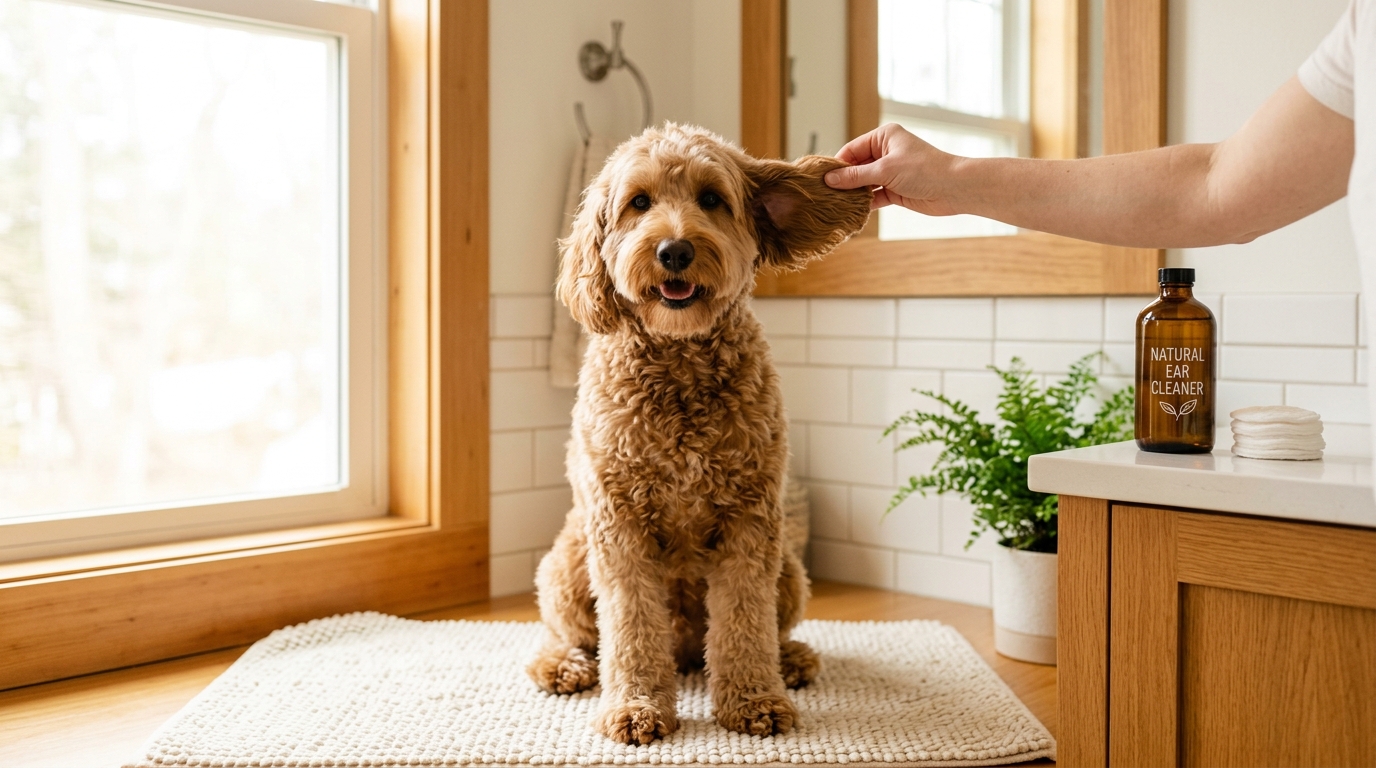
The single highest-value habit. A damp microfiber cloth or a dog-safe paw wipe over each foot after outdoor time physically removes the pollen, grass, and residue before it can sit against the skin all evening. For a doodle, this matters more than almost any supplement because it addresses the coat-trapping problem directly.
Weekly (or twice-weekly) paw soaks
A lukewarm soak helps flush allergens and knock back yeast. You can use plain water for allergen rinsing, or a diluted, dog-safe antiseptic—many owners use a veterinary chlorhexidine solution or a vet-recommended antifungal soak. The non-negotiable step is drying thoroughly between the toes afterward, because a damp soak that isn't dried just feeds yeast. We do a quick towel-and-air routine.
Keep the fur between the pads trimmed
Ask your groomer to keep the paw pads and toe webs trimmed short, or learn to do it yourself with a small quiet clipper. Shorter fur = less allergen trapping and faster drying. This is doodle-specific and genuinely underrated.
Omega-3 fatty acids
Omega-3s (EPA and DHA from fish oil) support the skin barrier and calm inflammation from the inside. They work slowly—think weeks, not days—but they're one of the most evidence-backed skin supports for itchy dogs. See our picks and dosing thinking in Best Omega 3 for Doodle Skin Health.
Gut and skin support
Because so much of the immune system lives in the gut, a quality probiotic can help some allergy-prone doodles over time. We keep the reasoning practical in Best Probiotics for Doodles with Digestive Issues and round up skin-targeted options in Best Allergy Supplements for Doodles.
Bedding hygiene
Dust mites live in bedding, and your doodle sleeps with their face and paws pressed into it. Wash dog beds and blankets weekly in hot water, and if your dog sleeps in your bed, your sheets count too. This one quietly makes a real difference for dust-mite-sensitive dogs.
The right shampoo
A soothing or antifungal shampoo (matched to whether you're fighting itch or yeast) keeps the whole coat calmer, paws included. We compare options in Best Shampoo for Itchy Doodles.
Is It Food or Environmental? How to Tell
This is the question that determines your whole game plan, so it's worth getting right.
Environmental allergies usually:
- Follow a seasonal rhythm (worse spring/fall, better in winter)
- Flare after time outdoors
- Respond partly to paw wipe-downs and soaks
Food allergies usually:
- Are year-round with no seasonal break
- Concentrate on paws, ears, and rear end
- Don't improve much from environmental measures alone
- May come with digestive signs like soft stool or gassiness
If the pattern screams food, the only reliable way to confirm and identify the trigger is a vet-guided elimination diet—not a blood or saliva "allergy test," which is unreliable for food. Our step-by-step walkthrough is Elimination Diet for Doodles: A Step-by-Step Plan, and if you want to understand the difference between a true allergy and an intolerance first, Food Allergy vs Food Intolerance in Doodles Explained is the primer.
A quick reality check: many doodles have both. Environmental allergy is the underlying itch, and it lowers the threshold so a food that would otherwise be fine tips them over. Addressing both is often what finally calms the paws.
The Nighttime Routine That Stops the Licking
Here's the actual sequence we use in our house. With three doodles, anything fussy doesn't survive—this is what stuck.
- Evening walk with intention. A real walk that tires the body and the brain reduces bedtime restlessness (and the boredom-licking that comes with it).
- Wipe or rinse paws on the way in. Cloth by the door. Ten seconds per dog. This is the step that breaks the allergen-all-night cycle.
- Dry between the toes. Especially in wet or snowy weather. Damp toe webs are yeast's best friend.
- A settling chew before lights-out. A long-lasting chew gives the mouth something to do other than the paws while everyone winds down. For Gunnar this alone cut his bedtime licking noticeably—he'd rather work a chew than gnaw a foot.
- Clean bedding, cool room. Overheating makes itch worse, and clean bedding means fewer mites and less trapped allergen.
We rotate the twice-weekly paw soak into this on, say, Sunday and Wednesday nights so it becomes automatic rather than a thing we forget. Consistency beats intensity every time. The first week you probably won't hear a dramatic difference—give it two to three weeks and the licking should genuinely quiet down if you've matched the routine to the cause.
When Diet Deserves a Closer Look
If your tracking points to food, or the itch is stubbornly year-round, it's worth auditing what's in the bowl. Common culprits like chicken and beef show up a lot in doodles—see Common Food Triggers for Doodles: The Ingredient Guide, Chicken Allergy in Doodles, and Beef Allergy in Goldendoodles.
For dogs who need a simplified diet, a limited-ingredient food or, in more serious cases, a hydrolyzed diet may be the path—both are best chosen with your vet. And if you want the honest answer to "can I fix this with diet alone?", we tackle it head-on in Can Diet Fix Doodle Skin Problems?.
We feed raw at home partly because it makes ingredient control straightforward, but the principle—know exactly what your dog eats and change one thing at a time—applies whatever you feed.
FAQ
It rarely starts at night—it just becomes obvious then. During the day your doodle is distracted by walks, food, and play, so mild paw itch goes unnoticed. After lights-out the distractions stop, cortisol (your dog's natural anti-inflammatory) dips in the evening, and allergens tracked in on the paws have had all day to build up. The result is that persistent lick-lick-lick sound the moment the house goes quiet.
Look and smell. Environmental or food allergies tend to cause redness, rust-colored saliva staining, and itch across multiple areas. Yeast overgrowth adds a distinct musty, corn-chip or "Frito" smell, greasy or brown gunk between the toes, and often gets worse in humid weather. The two frequently happen together—allergy inflammation creates the warm, damp environment yeast loves. If you smell that yeasty odor, it's worth a vet visit.
A lukewarm paw soak with diluted, dog-safe antiseptic or a veterinary chlorhexidine solution once or twice a week helps, followed by thorough drying between the toes. Wiping paws with a damp cloth after every walk removes pollen and grass. Omega-3 supplements and a skin-support probiotic help from the inside over weeks. Avoid human anti-itch creams unless your vet approves them—dogs lick them off.
It can. Food-allergic doodles often show year-round itching that concentrates on paws, ears, and belly rather than following pollen seasons. If the licking never lets up regardless of season, a vet-guided elimination diet is the gold standard for finding the trigger. Poodle-line genetics make many doodles prone to food sensitivities, so it's a reasonable suspect for constant, non-seasonal paw itch.
Book a visit if you see swollen or cracked pads, bleeding, limping, a strong yeasty smell, brown or greasy discharge between the toes, or if licking is so relentless your dog can't settle or sleep. Sudden severe itching, hives, or facial swelling is an urgent situation. Persistent nighttime licking that doesn't improve with home care after two to three weeks also warrants professional help.
Your Next Step
Start tonight with the two easiest wins: wipe those paws on the way in and dry between the toes. Add a weekly soak and omega-3s, track the pattern for two weeks, and you'll usually see which direction the cause points—environmental or food.
If your tracking says food, work through Food Allergies in Doodles: The Complete Owner's Guide next. If you're catching that telltale yeasty smell, head straight to Yeast Infection on Doodle Paws. And for the bigger picture on why doodles are so itch-prone in the first place, Are Doodles Prone to Allergies? ties it all together. You—and your doodle—will be sleeping better soon.