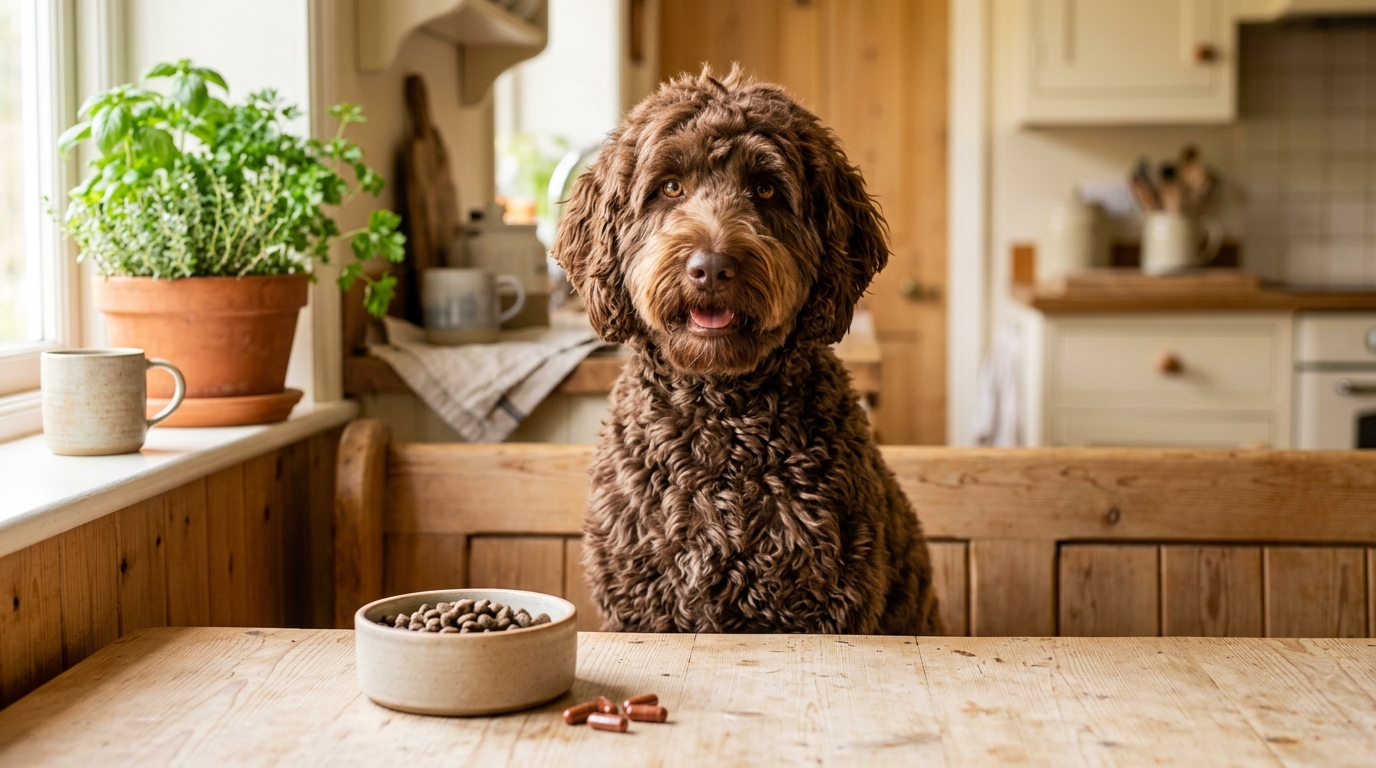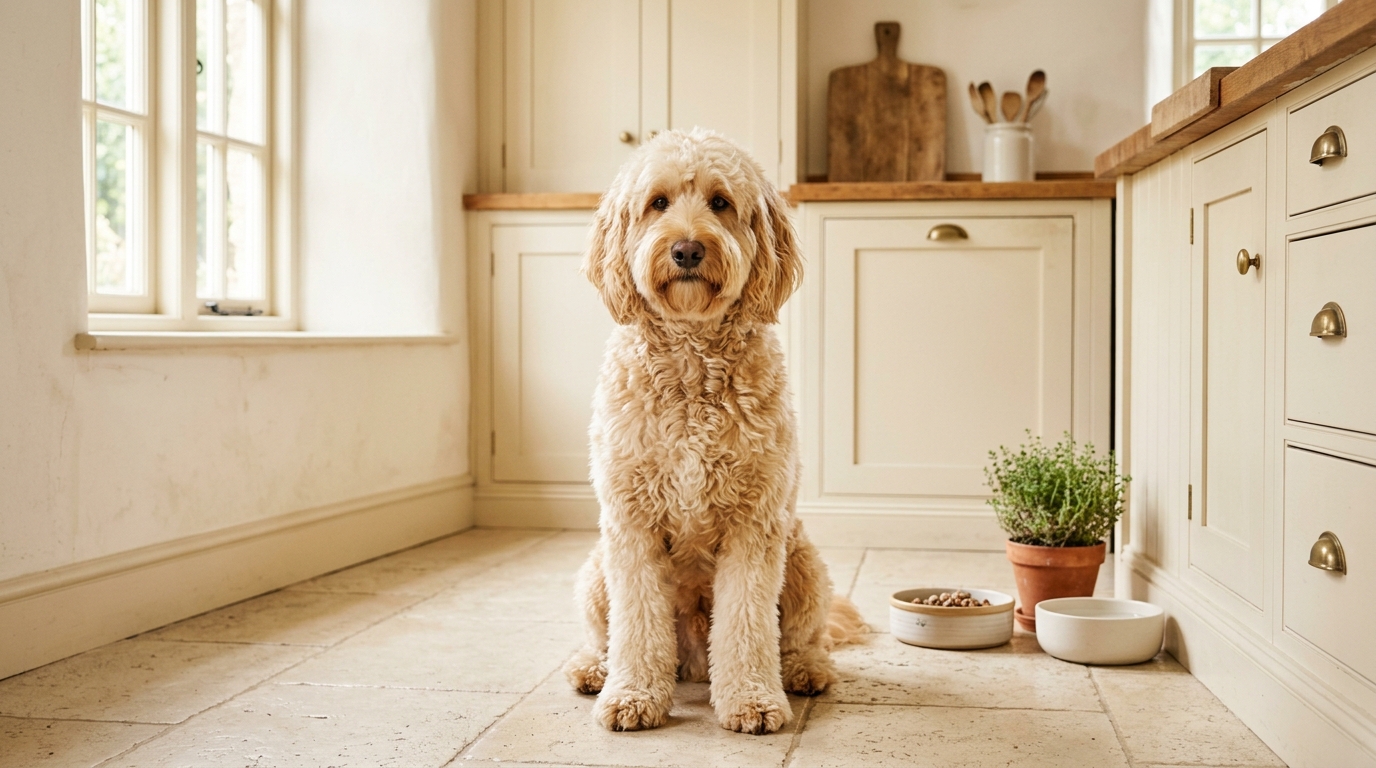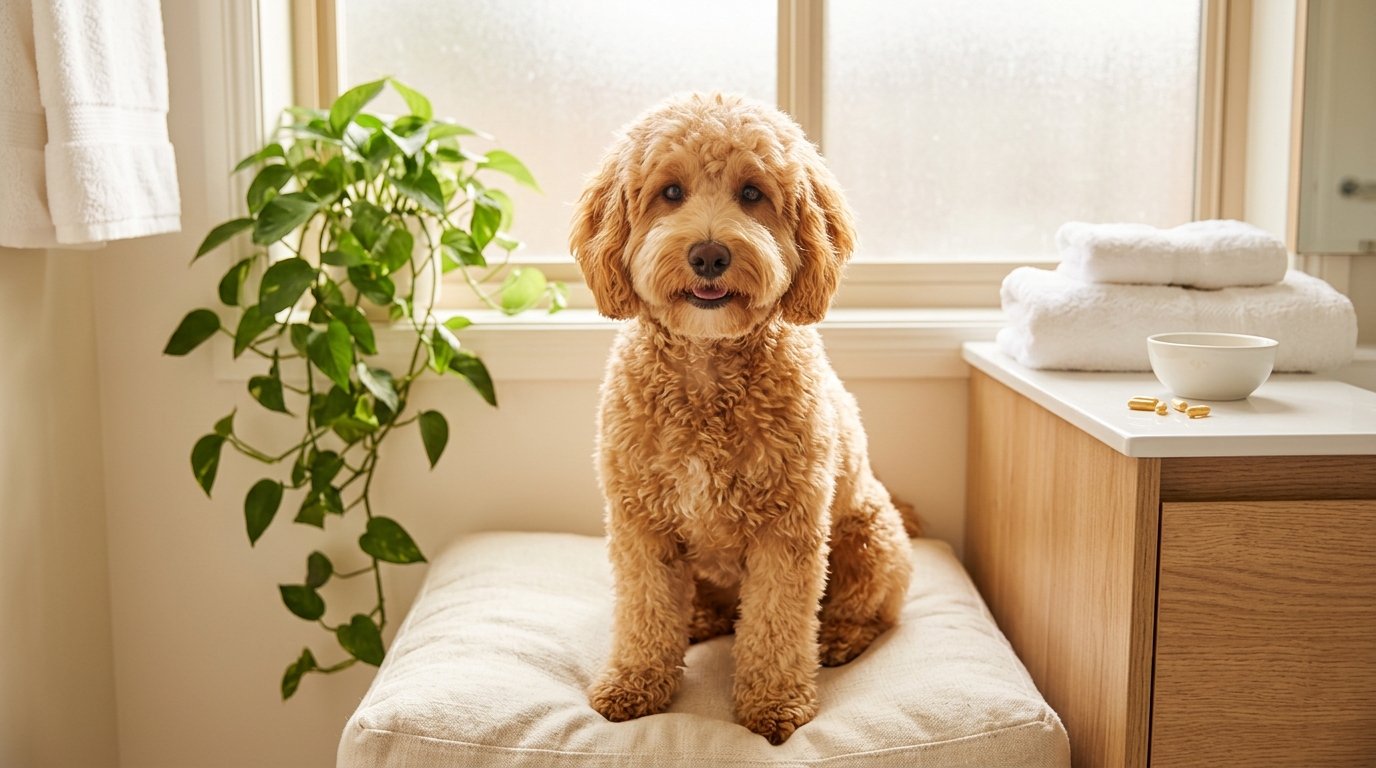
Calming chews can genuinely take the edge off mild, situational stress in doodles, thunderstorms, car rides, grooming, a houseful of visitors, using ingredients like L-theanine, alpha-casozepine (casein), tryptophan and melatonin. They support a calmer state; they do not sedate, and they do not cure true anxiety. The single most important thing for a wound-up doodle is not a chew at all, it's teaching the dog to relax, which has to be actively practiced. Our overall pick is NaturVet Quiet Moments; for the cleanest ingredient list, Native Pet.
That honesty matters, because "calming chew" is one of the most over-promised categories in the pet aisle. Used for the right thing, short-lived, predictable stress, a good chew is a lovely, low-risk tool. Used as a substitute for actual calm-training, it disappoints every time.
Below is what we look for, the three chews we'd actually buy (all screened to contain no chicken in any form), and an honest map of what these will and won't do for an anxious Australian Labradoodle, Goldendoodle, Bernedoodle or Sheepadoodle. If you already know you want a chew and just want the vetted shortlist, jump straight to the Top Picks below.
The Thing That Matters More Than Any Chew: Practiced Calm
Here is our honest, hands-on view, and it runs against a lot of common advice: the single most important thing you can train in a doodle is relaxation. Settling down and sleeping does not come by itself, it has to be practiced, like any other skill. Hyper energy tips easily into stress, and once a doodle is stressed, the restlessness feeds on itself.
We do not believe that more stimulation calms a wound-up doodle. If you only pile on mental games or walk a dog for hours a day, hyper turns into stress, stress makes them even more restless, and behavior problems follow. The order matters: calm first, mental stimulation second.
A big word on doodle personalities, because they are not all the same:
- Gösta is the only one of our three who has ever been genuinely hyper. He's funny, very social and slightly me-me, he wants to be first in everything, and even when there's a queue he somehow squeezes himself to the front. He's the dog who needs the most help learning to switch off.
- Gunnar has never been hyper. He's the sensitive, highly intelligent, deeply attached one, and his problems were stress and anxiety, separation anxiety and some reactivity, both now resolved. His stress was tied to discomfort (his itching and ears) and, honestly, to us not yet knowing how to communicate with him. Things changed when he was about three and we started doing it differently. He loves to work and is the most-trained of our three.
- Sven is laid back and happy-go-lucky. He likes to take his time and sniff the flowers, and in training he gives you a little and then asks to be excused.
Gunnar and Sven are clearly the calmer two. If your doodle is bouncing off the walls, know that it's a trainable thing, not a personality you're stuck with.
How we actually practice settling
Indoors, we use a slip lead when we need to. One of us holds the lead while we work, and the dog learns that in that moment they stay close and settle in place. It's practice, not punishment, short, calm, repeated. Over time it becomes the default: now when one of us works at home, the dogs lie down next to us, and when we move around they come along because they want to follow, not because they're frantic.
Sleep is not optional
A doodle needs roughly 12-15 hours of sleep a day, and puppies need even more. A short-sleeping doodle is very often a restless, "hyper" doodle. Ours sleep through the night, and whenever we sit still to work, they sleep too. If your doodle never seems to switch off, look at how much real rest they're getting before you look at a chew.
For vet-reviewed background on dog behavior and anxiety, the ASPCA is a reliable place to start.
What Calming Chews Can (and Can't) Do
A calming chew is a functional treat, not a medication, and not a shortcut past the calm-training above. The ingredients with the most evidence behind them are gentle nervous-system supports:
- L-theanine, an amino acid from green tea associated with reduced situational anxiety.
- Alpha-casozepine (casein), a milk-derived peptide studied for a mild calming effect.
- Tryptophan, a precursor to serotonin.
- Melatonin, best known for sleep, and useful for some dogs around noise events.
None of these is a knockout drug. Think of them as taking a stressful moment from a 7 down to a 4, not down to zero. That's genuinely useful for a doodle who gets wound up at the groomer or shakes through a storm, and it's the honest ceiling of what to expect.
Where they help most: predictable, short-term triggers, fireworks, travel, vet visits, grooming, new-baby chaos. Where they fall short: true separation anxiety, noise phobias that have escalated into panic, and reactivity. Those are behavior problems, and no treat resolves them. If your doodle's "anxiety" is really a gut issue in disguise, stress can absolutely churn the stomach, our stress and digestive problems guide is the better place to start, because the training is the actual fix for the behavioral side.
Top Picks
We chose these three on the criteria below: a clean-enough ingredient list, an evidence-backed calming blend, and, the hard filter, verified no chicken in any form. We left the fourth chew we were considering off this list entirely because it's a chicken-flavor formula, and that's a firm rule here rather than a slot we'll fill for the sake of a round number.
A quick note before the picks: these are food supplements, not medicine, and none of them replaces a vet's advice for a genuinely anxious dog, or the calm-training above. Dose to your doodle's weight and give them time to work.
| Product | Best For | Rating |
|---|---|---|
| NaturVet Quiet Moments Calming with Melatonin | Best overall value | 4.4 / 5 |
| Native Pet Air-Dried Calming Chews | Cleanest ingredient list | , |
| Zesty Paws Calming Chews (Turkey) | Novel-protein flavor | 4.5 / 5 |
One buying note that actually matters here: count vs. cost-per-chew. A 180-count tub looks expensive next to a 30-count bag until you divide it out, the big tub is usually far cheaper per dose, which matters if you're dosing a Standard-size doodle daily through fireworks season. Buy the small bag first to confirm your dog tolerates it and will actually eat it, then size up. You can compare current sizes and counts in Amazon's pet section.
Rule Out Pain and Itching Before You Reach for a Chew
This is easy to miss: hyper or restless behavior can be driven by pain, itching or discomfort, not by "anxiety" at all. A dog who won't settle, paces at night, or seems suddenly wired may simply be uncomfortable. Ruling that out comes first.
We learned this with Gunnar. His stress was closely tied to his itchy skin and ears, when the discomfort was there, so was the restlessness. Once we sorted the physical side and learned to communicate with him properly, the anxious behavior eased. No calming chew would have touched the real cause. If your doodle is licking paws, scratching, shaking their head or seems physically off, deal with that before you decide the problem is behavioral.
What Makes a Good Calming Chew for a Doodle
Because the Poodle line carries a real predisposition to food sensitivities and allergic skin disease, we screen calming chews the same way we screen food. A chew that upsets the gut or flares itchy skin isn't calming anything.
Our criteria:
- No chicken, anywhere in the list. This is the trap. Many "beef" or "turkey" calming chews still use chicken liver flavor or poultry meal to make them palatable. We read the full ingredient panel, not the headline flavor. Gunnar reacts to chicken, so this rule is non-negotiable in our house.
- A short, functional ingredient list. Fewer fillers, dyes and binders means fewer things for a sensitive doodle to react to.
- Evidence-backed calming ingredients, the L-theanine / casein / tryptophan / melatonin family, rather than a mystery "proprietary blend."
- A protein flavor that isn't your dog's trigger. If your doodle reacts to beef, a turkey-flavored chew is the safer bet, and vice versa.
If stress is churning your doodle's gut rather than just their nerves, our stress and digestive problems guide is the honest next read.
How to Use Calming Chews the Right Way
Timing is everything with situational use. Give the chew 30 to 90 minutes before the known trigger, before the groomer, before the car, before the fireworks start, not once your dog is already spiraling. Once a dog has tipped into panic, a treat has very little to grab onto.
For predictable seasonal stress (think a week of summer storms), some owners dose daily across that window. That's fine with most formulas, but dose strictly to your dog's weight, bigger doesn't mean better, and doubling up doesn't double the calm.
Pair the chew with a calming activity, not just a pill. A frozen lick mat or a stuffed KONG-style toy gives an anxious doodle something to do with the nervous energy, the licking and chewing are self-soothing in their own right. In our house, the chew plus a smeared lick mat during a thunderstorm does far more together than either alone.
Enrichment comes second, and it's dog-by-dog
Once a doodle has learned to settle, mental stimulation is a lovely add-on, these are very intelligent dogs and puzzle games suit them. We've worked our way through the Nina Ottosson puzzles, and the difference between our three is telling: Gunnar is really clever and genuinely loves them (he can do the level 4 puzzles), Sven does a little and then asks to be excused, and Gösta does them purely because he loves the treats. Enrichment is second, though, never the first tool you reach for with a restless dog.
A note for sensitive stomachs
Any new chew is a new food. Sven, our most sensitive stomach, gets loose stool after any change he isn't eased into, so we introduce a new calming chew the way we'd introduce anything else: half a dose for a couple of days, watching his output, before the full amount. If your doodle is similar, go slow. And if a "calming" chew gives your dog the runs, that's the opposite of calming, stop and try a cleaner formula.
What Calming Chews Will Not Fix
This is the part the packaging won't tell you. Calming chews do not resolve:
- Separation anxiety, a true panic response to being left alone. This needs graduated departure training and patient, gentle communication; a chew at the door is not the answer. Gunnar's separation anxiety resolved through connection and comfort, not a supplement.
- Escalated noise phobia, if your doodle has gone from nervous to genuinely terrified of storms year over year, that pattern usually needs a vet-guided plan.
- Pain-driven or medical restlessness, a dog who is suddenly anxious, pacing at night, or not settling may be uncomfortable, not anxious. Rule out pain and itching first.
- Unpracticed relaxation, a doodle who has never learned to switch off won't be fixed by a chew. That's the calm-training work at the top of this article.
Our whole approach with a stressed dog is gentle communication and a genuinely good connection, understanding what the dog is telling us, rather than drilling obedience. Gunnar's problems came from us not knowing how to communicate with him at first, not from a "bad" dog; once that changed, so did he.
If you've dosed correctly for a couple of weeks and seen nothing, or if the anxiety is severe, that's a call-your-vet situation, not a reason to keep buying stronger chews. Some dogs need prescription support or a certified behaviorist, and there's no shame in that; it's the responsible next step.
FAQ
They can help take the edge off mild, situational anxiety, car rides, fireworks, grooming, a vet visit, using ingredients like L-theanine, alpha-casozepine, tryptophan and melatonin. The effect is real but gentle and varies dog to dog. They are a support tool, not a sedative and not a cure for genuine separation anxiety, which needs a training plan and often veterinary input. And no chew replaces teaching a doodle to actually settle.
There is no single best for every dog. Look for a short ingredient list built around evidence-backed calming ingredients (L-theanine, alpha-casozepine/casein, tryptophan, melatonin) with no chicken and minimal fillers. For our doodles the NaturVet Quiet Moments formula is a reliable, affordable starting point, and Native Pet is our pick when a dog has food sensitivities. But the biggest lever is not a supplement at all, it's practicing relaxation and enough sleep.
Most are formulated for regular use, and many owners give them daily during a stressful season. That said, dose exactly as the label directs for your dog's weight, and check with your vet before starting if your doodle takes other medication, is pregnant, or has a health condition, melatonin in particular can interact with some drugs.
No. True separation anxiety is a genuine panic response and chews will not resolve it on their own. They may support a broader plan, but the fix is gradual desensitization and gentle communication work, and in moderate to severe cases working with your vet or a certified behaviorist. Our most anxious dog, Gunnar, improved through patient connection and comfort, not a treat at the door.
For situational use, give them about 30 to 90 minutes before the trigger so the ingredients have time to take effect. Some dogs respond the first time; others need a few consistent days before you see a steady difference. If you see no change after a couple of weeks of correct dosing, that is a sign the underlying issue needs a different approach, often more practiced calm, or ruling out pain.
Where to Go From Here
Pick the chew that matches your doodle, value and everyday use point to NaturVet Quiet Moments, a truly sensitive gut points to Native Pet, and a beef-reactive dog is safer on the turkey Zesty Paws. Then remember the chew is one small piece: the real work for a genuinely anxious or hyper doodle is practiced calm, enough sleep, and ruling out pain or itching first.
If stress is upsetting the gut, our stress and digestive problems guide is the honest next read. And to keep a sensitive doodle steady day to day, our gut health routine for sensitive doodles ties the feeding and calm-routine pieces together. You can also browse our full gut health supplements round-up for more support options.