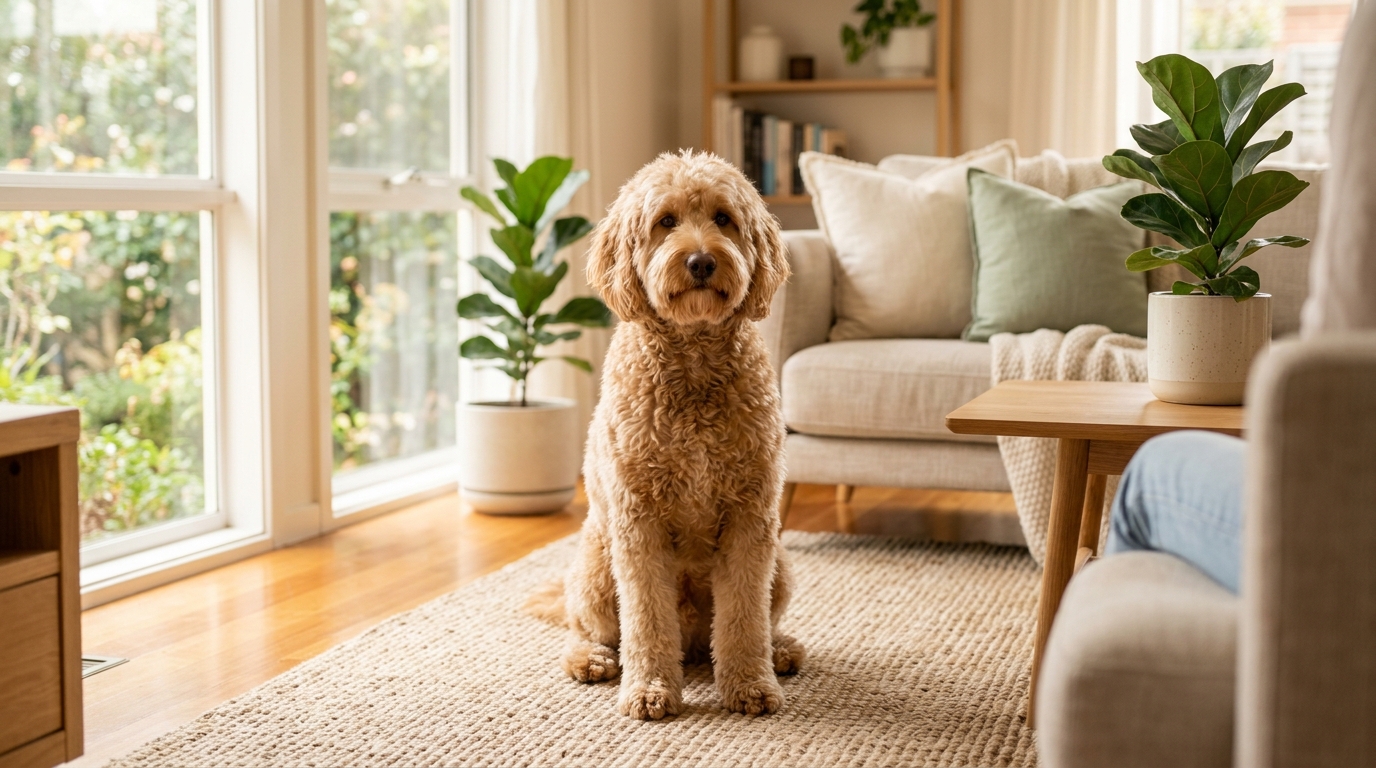
Most goldendoodle hyperactivity is normal adolescent energy from high-drive parent breeds, not a disorder, but the single most important thing you can train is relaxation, and it has to be practiced on purpose because it does not come by itself. Hyper tips easily into stress, and in our house piling on more exercise or more stimulation never calmed a wound-up doodle; it fed the cycle. Calm first, mental stimulation second, and enough sleep underneath both.
If you're standing in a wrecked living room wondering whether your dog is broken, take a breath. You almost certainly have a normal, healthy adolescent doodle, but one who hasn't yet learned how to switch off. Before you blame drive or diet, there's one more thing to rule out: discomfort. Pain, itching, and ear trouble can make a dog look "hyper" when he's really just uncomfortable.
If you already suspect the answer is calming skills and enrichment, the shortcut is our ranked puzzle feeders for doodles and our best lick mats for doodles, both do a lot of the heavy lifting once the calm foundation is in.
Why is my goldendoodle so hyper?
A doodle is a cross of two breeds that were both built to work. The Poodle is a busy, whip-smart water retriever, and the Golden Retriever and Labrador lines were bred to fetch all day. Cross them and you get a dog with stamina, brains, and a strong desire to be involved in everything you do. That's not a defect. That's the breed doing its job.
But here's the part most "tire them out" advice gets wrong: with a doodle, hyperactivity almost always means the dog has never learned to relax, and often that hyper is really stress wearing an energetic face.
Rule out discomfort first
Before you treat behavior as a training problem, check that it isn't a body problem. Restless, wound-up, can't-settle behavior can be driven by pain, itching, or ear trouble, anything that keeps a dog physically uncomfortable will keep him mentally on edge.
We learned this with Gunnar, our sensitive, highly intelligent one. His stress and anxiety were tied directly to discomfort, his itchy skin and his ears, and, honestly, to us not yet knowing how to communicate with him. A dog who is uncomfortable cannot settle no matter how many walks you add. If your doodle is itchy, licking his paws, or scratching at his ears, start there: our itchy skin and paws hub and best ear cleaners for doodles are the places to begin.
For vet-reviewed background on dog behavior and anxiety, the ASPCA is a reliable place to start.
Calm is the skill, and you have to teach it
In our house, the single most important thing we train is relaxation. Settling down and sleeping don't come by themselves; they're practiced like any other skill. We do not believe more stimulation calms a hyper doodle. If you only add mental games, or walk a dog for hours every day, hyper turns into stress, stress makes the dog even more hyper and restless, and behavior problems follow. It runs against the common advice, but it's what years with three doodles have shown us.
So the order matters: first the dog learns to calm down; only then comes mental stimulation.
How we actually practice settling
Indoors, we use a slip lead when we need one. We hold the lead while we work at our desks, and the dogs learn that in that moment they stay close to us and settle in place. It's practice, not punishment, a few quiet minutes at a time, repeated until settling near us becomes the default. Over the years this has changed our whole house: when one of us works from home, the dogs lie next to us, and when we move around they usually come along because they want to be part of whatever we're doing.
Protect sleep like it's medicine
This is the fix owners skip. A doodle needs about 12-15 hours of sleep a day, and puppies need even more. A dog with no enforced downtime becomes an overtired, frantic version of himself, nippy and unable to settle. Ours sleep through the night, and whenever we sit still to work, they sleep too. Build in real quiet naps during the day, especially after exercise and after visitors leave.
Which of your dogs is the hyper one?
It helps to know that "hyper" isn't one temperament. In our three, only one has ever truly been hyper:
- Gösta is the only hyper one. He's funny, very social, and slightly me-me: he wants to be first in everything, and even if there's a queue he somehow squeezes himself to the front. He settled well as a puppy, but that go-first drive is pure Gösta.
- Gunnar has never been hyper. He's the sensitive, highly intelligent one, deeply attached to one person, and the only one who's had real behavior problems, separation anxiety and some reactivity, both now resolved. His trouble was stress and anxiety, not hyperactivity, and it was tied to discomfort and to us not knowing how to communicate with him at first. He was about three when we started doing it differently, and it took longer with him because we didn't understand it at first. He genuinely loves to work and lights up the moment training starts, he's the most trained of our three.
- Sven is laid back and happy-go-lucky. He likes to take his time, sniff the flowers, and move calmly. In training he gives you a little and then asks to be excused; the treats are rarely good enough to keep him going long.
Gunnar and Sven are clearly our calmer two. The point for you: a wound-up doodle isn't automatically "a hyper breed", it might be a stressed dog, an uncomfortable dog, or simply a dog who hasn't been taught to switch off yet.
For the wider picture of anxiety and over-arousal, including what to do when hyper tips into stress, see our calm doodle guide.
When do goldendoodles calm down?
Here's the honest range: most goldendoodles and Labradoodles start noticeably settling between 18 months and 3 years, with a lot of families reporting the shift around age two. This is a range, not a promise.
A few things move the needle:
- Size plays a role. Smaller doodles often mature a touch earlier, and larger Standards a touch later. If you're still deciding on size, our mini vs medium vs standard doodle guide walks through what each size means for energy and daily upkeep.
- Practiced calm matters more than age. A dog who's been taught how to settle at 18 months is calmer than an untrained three-year-old. Time alone doesn't teach the skill, you do.
- Breed mix varies. A Bernedoodle isn't a Sheepadoodle isn't a Goldendoodle, and an Australian Labradoodle is its own cross again. They share the doodle label but not one temperament.
The families who wait longest for calm are usually the ones who assumed it would arrive on its own. It arrives faster when you build it.
What are doodle zoomies, and should I worry?
Doodle zoomies are those glorious, chaotic bursts of sprinting in tight circles, usually after a bath, before dinner, or when a friend arrives. The technical name is Frenetic Random Activity Periods (FRAPs), and they are completely normal, a healthy discharge of energy or excitement that typically lasts under a minute.
They're only worth a second look when:
- They happen constantly throughout the day, which suggests unmet needs or an overtired dog.
- They're triggered by stress or over-arousal rather than plain happiness.
- Your dog can't come down afterward and stays frantic.
Give zoomies a safe surface with good footing, a young doodle skidding across hardwood at full tilt is an injury waiting to happen. Then let the burst run its course. Chasing your dog turns it into a game and makes it last longer.
Real exercise still matters (calm-first isn't couch-first)
Calm-first doesn't mean under-exercised. Our three get plenty:
- A big yard where they run free several times a day, they usually follow us outside anyway.
- One or two walks a day. Usually a 30-60 minute walk (we need the exercise too), plus a short 5-15 minute walk before bed so everyone pees and poops properly and sleeps peacefully.
The mistake is thinking more of this is the cure for hyper. It isn't. A well-exercised dog who has never learned to switch off is still a restless dog. Exercise is the supporting player; relaxation and sleep are the foundation.
Then, and only then, feed the brain
Once your dog can actually calm down, mental work is genuinely valuable. Doodles are very intelligent, so puzzle games work well. We've tried all the Nina Ottosson puzzles, and the results are pure personality:
- Gunnar is really clever and truly loves them, he can do the level 4 puzzles.
- Sven does a little, then asks to be excused.
- Gösta loves treats so much that he'll do any of them just for the food.
Rotate a few tools so it stays interesting:
- Puzzle feeders, start easy and build up. Our puzzle feeder guide ranked by difficulty helps you pick the right starting point.
- Lick mats and stuffable toys, the slow, repetitive licking and chewing is genuinely calming. See our best lick mats for doodles and stuffable toys guide. For time alone, stick to fillable and chew toys, never puzzles; our best home alone toys and the home alone routine cover that.
- Snuffle and scatter feeding, hide part of a meal in the grass or a snuffle mat.
Matching the plan to the "hyper" you actually have
| If your doodle is… | You'll see… | Do first | Do less of |
|---|---|---|---|
| Uncomfortable | Itching, paw licking, ear scratching, restless | Rule out pain, allergies, ears, vet if needed | Assuming it's a training problem |
| Never taught to settle | Wired, can't focus, jumpy, barky | Practice settling on a slip lead; protect sleep | Adding more walks and stimulation |
| Overtired | Frantic, nippy, won't settle | Enforced naps toward 12-15 hours of sleep | Any added activity until rested |
The mistake is guessing wrong and doubling down. If a "tired out" dog is actually over-stimulated or overtired, extra activity makes tonight worse, not better.
Our approach is communication, not obedience drills
Everything above sits on one idea: we aim for a genuinely good connection with the dog, communicating in a way the dog understands, gently. The behavior problems we've had came from us failing to communicate, not from a "bad" dog. It's quiet, dog-friendly, and built on trust rather than commands, and it's what turned Gunnar's stress around once we finally understood him. We describe how we apply it in the Dog Listener method for doodles, and the books behind it are in our best dog behavior books for doodle owners.
If hyper behavior comes bundled with gut symptoms, soft stool, restlessness around mealtimes, our guide on stress and digestive problems in doodles is worth reading, and if you're reviewing the bowl anyway, our guide on what to feed a goldendoodle covers the fundamentals.
A realistic daily rhythm
FAQ
Most goldendoodle hyperactivity is normal adolescent energy inherited from two working parent breeds, the Poodle and the retriever line, both smart, active dogs bred for a job. But the biggest thing to understand is that relaxation is a skill your dog has to be taught, not one that arrives on its own. Hyper tips easily into stress, and stress makes a doodle even more wound up. Also rule out discomfort first: pain, itching or ear trouble can drive restless, hyper-looking behavior.
Most goldendoodles and Labradoodles start noticeably settling between 18 months and 3 years of age, with the biggest shift often around age two. Smaller doodles sometimes mature a little sooner and larger Standards a little later, but this is a range, not a promise. What speeds it most is actively practicing settling and protecting sleep; a dog that never learns to switch off can stay wired well into adulthood regardless of age.
Zoomies, the sudden bursts of sprinting in circles, technically called Frenetic Random Activity Periods, are completely normal, especially in young doodles. They're a healthy release of pent-up energy or excitement and usually last under a minute. They become worth attention only if they happen constantly, are triggered by stress, or your dog seems unable to stop and calm down afterward, which points to over-arousal rather than simple happy energy.
In our experience, no, not on its own. Walking a hyper doodle for hours or piling on stimulation tends to feed a stress cycle: the dog gets more wound up, not less. Calm comes first: teach and practice settling, protect 12-15 hours of sleep a day, and only then layer in mental work. Real exercise still matters, a big yard and one or two walks a day, but it is a supporting player, not the whole answer.
Not reliably. Neutering can reduce some hormone-driven behaviors like roaming or marking, but it does not turn a high-energy, unsettled doodle into a calm one. The ability to settle comes from practiced relaxation, enough sleep, a good daily routine and gentle communication far more than from hormones. Talk to your vet about timing for your individual dog rather than expecting it to solve hyperactivity.
Where to go next
A hyper doodle isn't a broken doodle, it's usually a young dog who hasn't been taught to switch off yet, and sometimes a dog who's uncomfortable or stressed. Rule out discomfort, practice settling deliberately, protect sleep, and keep exercise real but not endless. Most families see real change well before their dog "grows out of it."
For more calming tools, our best lick mats for doodles round-up is a good next read, and if size is still on your mind, the mini vs medium vs standard doodle comparison explains how build shapes energy and daily routine.