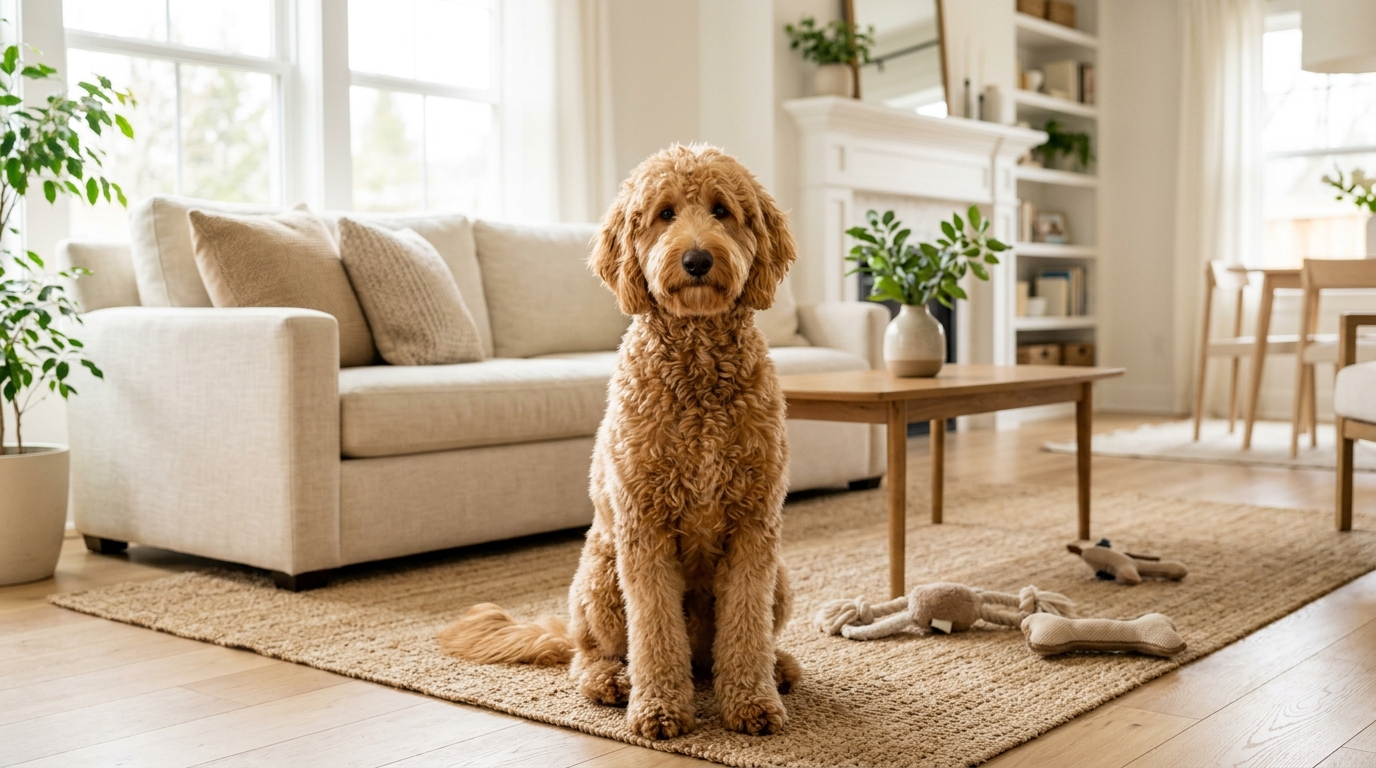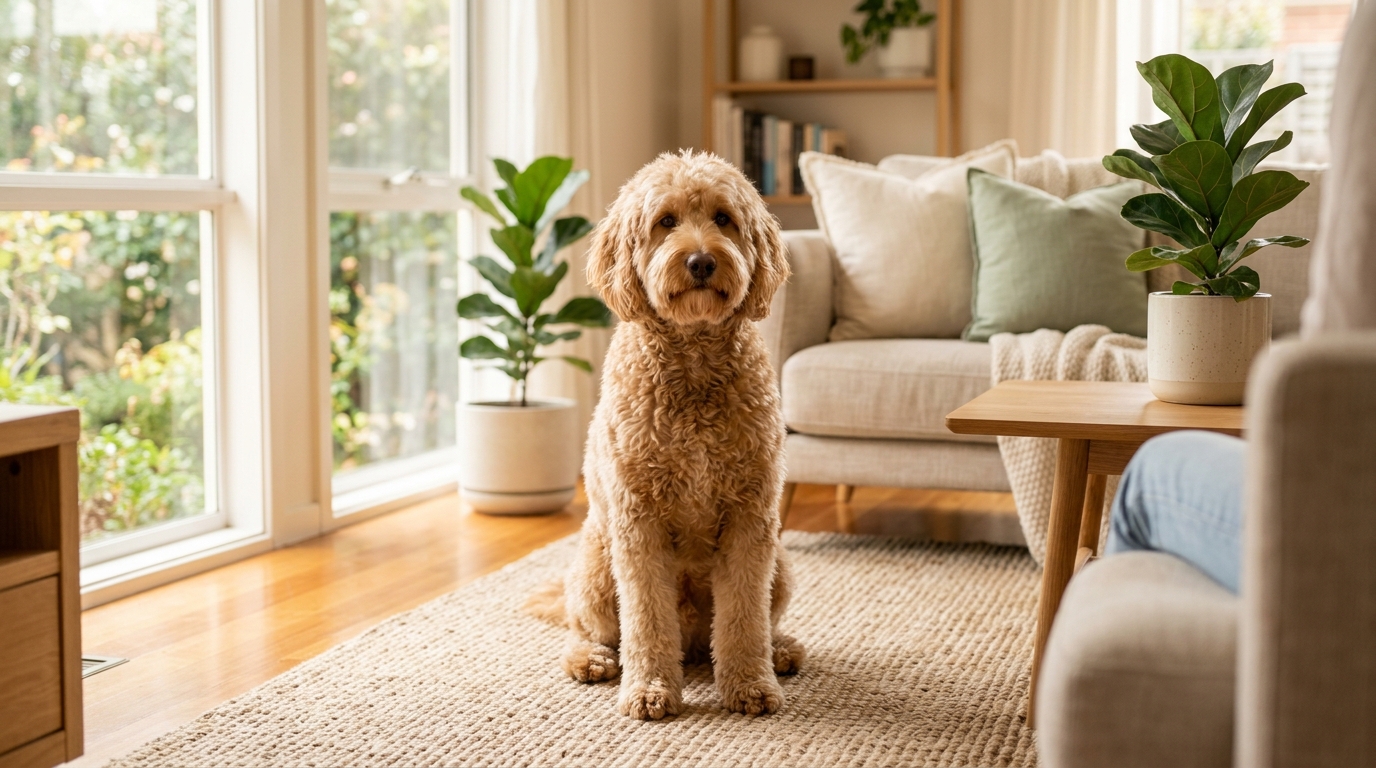
The dog listener method is Jan Fennell's approach to living with dogs, also called Amichien Bonding, and at its heart it is about taking responsibility so your dog doesn't have to, not about punishment, dominance battles or being "above" your dog. In our house the four practical parts we actually use are: calm consistency, clear routines, not rewarding anxious behavior with attention, and never punishing. Those habits overlap heavily with modern reward-based training, and they are what resolved our behavior problems completely. What we skip is the disputed pack-and-alpha explanation behind the method, which is not settled science.
We want to be honest from the first line: this is an owner account, not a clinical one. We have three Australian Labradoodles, and only one of them ever had real behavior problems. This is the story of what changed for him, what we kept from the method, and what we quietly left behind.
If you already know you want the calm-first approach and just want the enrichment side that comes after settling, our best puzzle feeders for doodles guide is the practical companion to this one, but read the calm part first, because the order matters.
What is the dog listener method?
The dog listener method comes from Jan Fennell's book The Dog Listener, and the technique she describes is called Amichien Bonding. Stripped to its core, it is about being a calm, reliable presence for your dog so that the dog does not feel it has to manage the household itself. Instead of correcting a dog with force, you change how you behave, your calm, your consistency, your routines, and let the dog settle around that.
In a nutshell, this is how we understand it: we signal to the dog that we are responsible. "This is my job, I'll handle it, you don't need to worry about it, your job is to take it easy." When a dog knows that, it doesn't need to bark all the time, it doesn't need to be on guard all the time, and it doesn't need to worry when we leave, because it isn't responsible for us. A lot of everyday problem behavior is a dog trying to do a job nobody should have given it.
In our own words, the parts we use every day are:
- Calm consistency. You react the same way every time, without drama, so the dog always knows what to expect from you.
- Clear routines. Predictable rhythms for meals, walks, rest and greetings. A dog that knows what happens next has far less to worry about.
- Not rewarding anxious behavior with attention. When a dog is whining, pacing or demanding, you don't feed that state with fussing and reassurance, you calmly wait for the dog to settle and respond to the calm.
- Never punishing. No shouting, no physical corrections, no intimidation. Ever.
For vet-reviewed background on dog behavior and anxiety, the ASPCA is a reliable place to start.
Is it about being the alpha? Not the way we use it
This is the part of the method that gets misunderstood most, so we want to be clear. We don't think of ourselves as ranking above our dogs. The method, as we use it, rests on one idea: the people take responsibility, so the dog doesn't have to.
Think about what a worried dog is actually doing. It barks at every sound because someone has to deal with it. It watches the window because someone has to keep guard. It panics when you leave because, in its mind, it is responsible for you and you have just walked off. Calmly showing the dog that those jobs are yours takes that weight off it. The message is simple: I've got this, you can relax.
It is also worth knowing that the old wolf-pack dominance model behind a lot of "alpha" talk has been widely revised by modern behavior science. That is one more reason we leave rank out of it. The practical habits, calm consistency, predictable routines, not reinforcing anxious behavior and never punishing, are things modern reward-based trainers recommend too; they simply explain them through learning and emotional state rather than pack position.
Our story: Gunnar, discomfort, and learning to communicate
Gunnar is our sensitive, deeply intelligent Australian Labradoodle, and he is the only one of our three who ever had genuine behavior problems. He had separation anxiety and some reactivity. Both are now resolved.
For a long time we didn't understand him. He is attached to one person especially, notices our feelings before we do, and he is that odd, wonderful mix of a little fearful and genuinely brave. He was about three years old when we started doing things differently, and honestly, it took longer with him precisely because at first we didn't know how to communicate with him.
Two things mattered more than any technique:
First, his stress was tied to discomfort. Gunnar is our ears-and-yeast dog, and his itching and recurring ear trouble were part of the picture. A dog who is uncomfortable in his own skin is a dog under stress, and no calm routine fixes a dog who hurts. If your doodle's behavior changed, rule out pain and itch first, a curly wool coat and floppy ears hide skin and yeast issues beautifully. Our guide to why a doodle is itchy all the time covers where to look, and allergy vs yeast infection helps you tell them apart.
Second, the problem was our communication, not a "bad" dog. Once we became genuinely calm and consistent, and stopped, without realizing it, rewarding his anxious moments with worried attention, Gunnar started to relax. The change in him tracked the change in us.
The four parts we actually use
Here is how the practical elements look in a house with three doodles, and how they map to what modern trainers would say.
| Principle we use | What it looks like day to day | Modern-training equivalent |
|---|---|---|
| Calm consistency | Same low-key reaction every time; no drama at the door | Predictable handler behavior, threshold management |
| Clear routines | Set rhythm for meals, walks, rest | Predictability reduces stress and reactivity |
| Not rewarding anxious behavior with attention | Wait for calm before engaging; don't fuss the whine | Reinforcing the behavior you want, not the state you don't |
| Never punishing | No shouting, no corrections, no intimidation | Force-free, reward-based methods |
How we practice settling indoors
The single most valuable thing we've trained is not a trick, it's relaxation. Settling and sleeping have to be actively practiced; they don't just appear. Indoors we use slip leads when we need to: one of us holds the lead while we work, and the dogs learn that in that moment they stay near us and settle in place. It is practice, not punishment. Doodles need a lot of sleep, roughly 12-15 hours a day or more, puppies even more, and a dog that can switch off is a dog that copes.
Calm first, stimulation second
We do not believe more stimulation calms a hyper doodle. This runs against the common "tire them out" advice, so we say it plainly: first they learn to calm down, then comes mental work. If you only pile on enrichment or walk a stressed dog for hours, hyper tips into stress, stress feeds more restlessness, and problems follow.
Once a doodle can genuinely settle, enrichment is brilliant for such a clever breed. Gunnar is the puzzle star of our three, he'll work a level 4 Nina Ottosson without blinking. Gösta, our only truly hyper one, does the puzzles purely because he loves treats. Sven does a little and politely asks to be excused. If you're ready for that second stage, our best puzzle feeders for doodles and best lick mats for doodles guides are where we'd point you.
What exercise looks like (calm-first isn't couch-potato)
To be clear, calm-first does not mean inactive. We have a big yard where they run free several times a day, plus 1-2 walks daily, usually a 30-60 minute walk (we need it too) and a short 5-15 minute walk before bed so everyone toilets properly and sleeps peacefully.
What we skip from the method
Two things:
- Reading it as rank. We don't treat it as being "above" our dogs. We use the routines to show the dogs we have things handled, so they can relax.
- Rigid ritual for its own sake. We keep what genuinely helped our dogs feel safe and drop anything that felt like theater. The goal is a real connection, communicating in a way the dog understands, not obedience drills or a branded system.
Our three are very different, and the method never had to be one-size-fits-all. Gunnar is the sensitive, reserved worker who lights up when training starts. Sven is laid-back and happy-go-lucky, sniffing the flowers at his own pace. Gösta is the funny, me-first social butterfly who wants to be at the front of every queue. The consistency was the constant; the application flexed to each dog.
Where does this fit if your doodle is stressed and unwell?
Behavior and health are tangled in doodles more than people expect. Stress alone can upset a doodle's gut, if anxious episodes come with loose stool, our guide to stress and digestive problems in doodles is the practical next read. And because discomfort so often drives behavior, checking ears, skin and gut is part of the behavior work, not separate from it.
A quick self-check before you decide it's "just" a training issue:
FAQ
It is Jan Fennell's approach to living with dogs, also called Amichien Bonding, built on the owner calmly taking responsibility so the dog can relax, rather than on punishment or dominance confrontations. In practice it means staying calm, keeping routines predictable, not feeding anxious behavior with attention, and never using force. The practical habits overlap heavily with modern reward-based training, even though the underlying pack-and-alpha explanation is disputed by behavior science.
The calm, consistent parts worked very well in our house with our Australian Labradoodles, especially with Gunnar, who had separation anxiety and some reactivity that are now resolved. What made the difference was not any single trick but consistency, predictable routines, and treating his stress as communication rather than misbehavior. We can't promise the same for every dog, and severe cases still need a vet or a qualified behaviorist.
No, not in the way we use it. Fennell uses pack language, but in our reading the method is not about being higher in a hierarchy than your dog. It is about the owner taking responsibility so the dog doesn't have to: you signal "I've got this, you can relax." A dog that knows its people are in charge of things doesn't need to bark at everything, guard constantly or worry when you leave. The old wolf-pack dominance model has also been widely revised by behavior science, so we leave the rank talk aside and keep the responsibility part.
Yes, and this matters enormously for doodles. Gunnar's stress was tied directly to discomfort from itching and recurring ear trouble, a curly coat and floppy ears hide skin and yeast problems well. Before you label a behavior issue as purely emotional or a training gap, rule out pain, itch, ears and gut discomfort with your vet. No calm routine fixes a dog who hurts.
The method itself leans on calm interaction more than food, but we combine its consistency with reward-based training and enrichment. In our house, calm comes first and mental stimulation comes second: once a dog can settle, puzzle feeders and games are great for a clever breed. Adding stimulation to an already-stressed doodle tends to wind them up further, not calm them down.
Where to go next
If your doodle's behavior shifted recently, start by ruling out discomfort rather than jumping straight to training theory, why is my doodle so itchy all the time is where we'd begin, since skin and ear trouble sit underneath so many stress problems. Once you've addressed comfort and settling, move on to the fun part and match the right enrichment to your dog with our best puzzle feeders for doodles guide. Calm first, stimulation second, that order changed everything in our house.