
Doodle tear stains are the reddish-brown streaks that run from the inner corner of the eye down the face, and they are caused by porphyrin, an iron-based pigment naturally present in tears, that oxidizes on damp fur and turns rusty in air and light. They are usually cosmetic, not a medical problem: the real drivers are excess tearing, hair that wicks tears into the coat, and yeast growing in the moist fur below the eyes. Clean the area daily, keep the hair trimmed and dry, and see your vet if you notice a red eye, squinting, or thick discharge.
If you have a cream or white Goldendoodle or Labradoodle, you've probably stared at those stains and wondered whether they mean something is wrong. Most of the time they don't. But because doodles combine a fluffy fleece coat with the tearing tendencies of their parent breeds, staining shows up easily and takes patience to manage.
This is the pillar guide for our Eyes & Tear Stains cluster. We'll cover what causes staining, a daily routine that actually works with a fluffy face, when to bring in your vet, and where diet fits in, honestly, without promising a cure.
What are doodle tear stains, exactly?
Tears aren't just water. They carry porphyrin, a pigment your dog's body produces as it breaks down red blood cells. Porphyrin comes out in tears, saliva, and urine, and it has one stubborn habit: it stains reddish-brown when it's exposed to air and light.
So the mechanism is simple:
- Tears leave the eye and land on the fur below it.
- Instead of evaporating quickly, they soak into the coat and sit there.
- The porphyrin in those tears oxidizes and dyes the hair rusty.
- The damp fur becomes a cozy spot for yeast, which can darken the color further and add a faint musty smell.
On a black or dark coat you'd barely notice. On a white doodle or a cream Australian Labradoodle, the same amount of staining reads as an obvious rusty streak. That's why "tear stains on white doodle" is one of the most-searched versions of this problem, it's not that pale doodles tear more, it's that you can see it.
For a vet-written reference on the conditions mentioned here, the Merck Veterinary Manual is a reliable place to check.
Why do Goldendoodles and Labradoodles get tear stains so easily?
A few doodle-specific traits stack up here, and it helps to see them separately.
The coat wicks tears into the fur
That soft fleece or curly coat is exactly what makes doodles doodles, and it's also a wick. Hair growing from the inner corner of the eye pulls tears sideways into the coat instead of letting them run off and dry. The longer the face hair, the more it holds moisture against the skin. This is the single biggest lever most owners can pull, and it's the one groomers focus on.
The Poodle line brings a real allergy predisposition
The Poodle side of your doodle carries a documented predisposition to allergic skin disease (atopy) and food sensitivities. Some dogs inherit it, some don't, it's a tendency, not a guarantee. But allergies mean itchy, watery, inflamed eyes, and watery eyes mean more porphyrin landing on the fur. If your doodle also rubs its face, licks paws, or battles recurring ear or skin trouble, the tearing may be one visible symptom of a bigger allergic picture. Our guide on whether doodles are prone to allergies walks through that predisposition in detail.
Shallow or blocked tear ducts
Tears are supposed to drain through a small duct at the inner corner of the eye into the nose. If that duct is narrow, partially blocked, or a puppy simply hasn't grown into a normal tear-drainage setup yet, tears overflow onto the face instead. Some doodles improve as they mature; some have a lasting anatomical tendency to overflow. Your vet can check for this.
Yeast in the damp fur
Once the fur stays wet, yeast moves in. It doesn't cause the original tearing, but it deepens the stain and adds odor, and it's the reason a purely cosmetic problem can start to smell. If yeast is a recurring theme for your dog elsewhere (paws, ears, skin folds), it's worth reading our piece on how to tell an allergy from a yeast infection, because the two travel together.
If your doodle also battles recurring yeast and itch, and you already know you want to tackle it from the inside, our shortlist lives at best allergy supplements for doodles, but read the routine below first, because no product beats keeping the fur dry.
How do you get rid of tear stains on a Goldendoodle?
Here's the honest version: you manage them, you don't erase them overnight. Hair that's already stained is dyed all the way through, it only truly disappears as it grows out and gets trimmed away. What you can do is stop new staining and keep the area clean while the old stained fur cycles out.
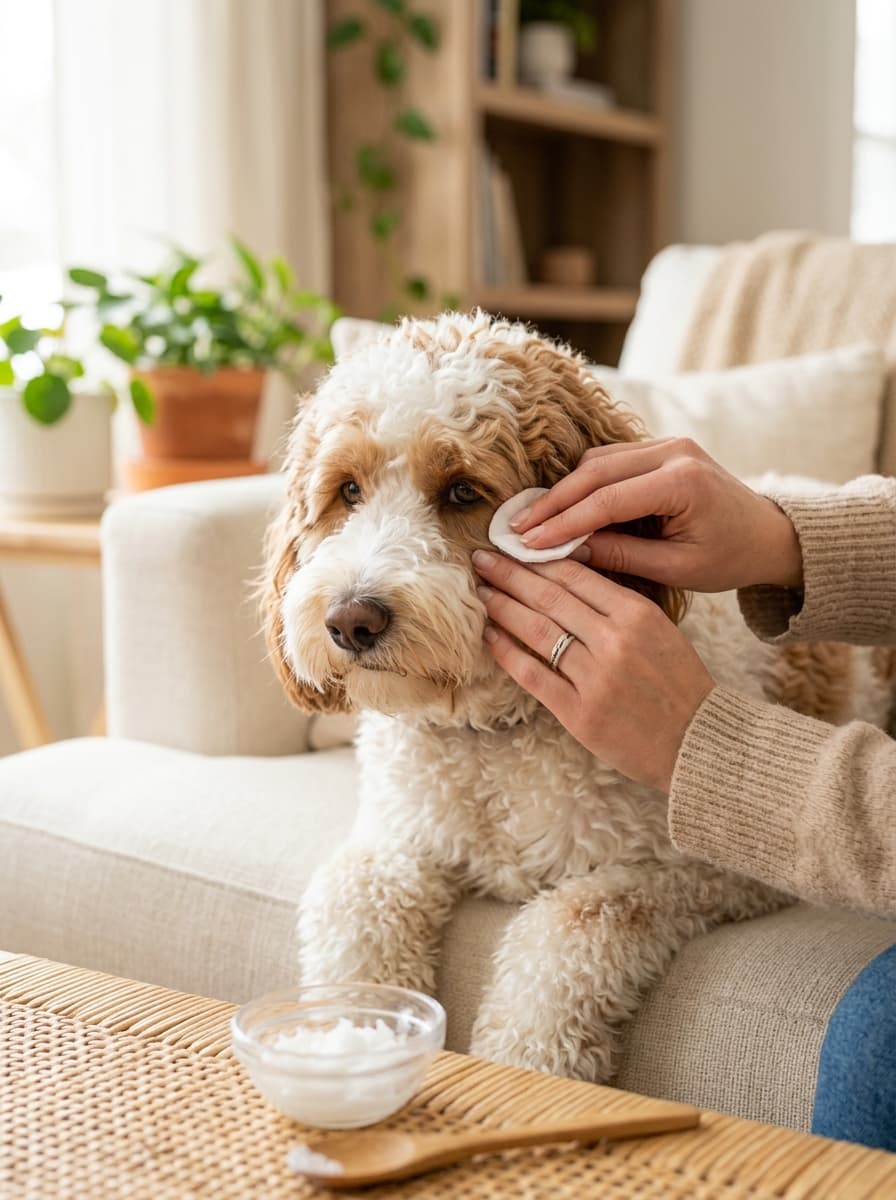
Our approach with three doodles comes down to two things done consistently: keep it trimmed, and keep it dry.
A daily cleaning routine that works with a fluffy face
We fold this into the same evening rounds where we check ears and paws. With Gunnar, our ears-and-yeast dog, a quick face-and-ear pass is already a habit, so adding a wipe under the eyes took no extra effort. Consistency is what pays off; a heroic scrub once a week does far less than thirty seconds every day.
Trimming around the eyes
Because the coat is the wick, trimming is the highest-value habit. Ask your groomer to keep the hair at the inner eye corners short so tears can run off and evaporate instead of soaking in. Between grooms, a light tidy every few weeks keeps it from creeping back. This is also where general coat upkeep overlaps with eye care, a matted, damp face traps everything, and our doodle matting guide covers keeping that fleece coat from felting up in the first place.
When are doodle tear stains a vet issue?
Most staining is cosmetic. But tearing is a symptom, and a few signs mean the tearing has a cause that needs looking at rather than wiping away.
Call your vet if you see any of these:
| Sign | What it may point to |
|---|---|
| Red or inflamed eye (white or rim looks angry) | Conjunctivitis, irritation, infection |
| Squinting or holding the eye shut | Pain, a scratch, a foreign object |
| Thick, colored, or gooey discharge | Infection, different from watery tears |
| Pawing or rubbing at the face | Irritation, allergy, or something lodged |
| Sudden increase in tearing on one side | Blocked duct, injury, or a stray hair rubbing the eye |
| Cloudiness or a visible change in the eye | Needs prompt veterinary assessment |
Watery, clear tears with bright comfortable eyes and only a rusty stain? That's the cosmetic version, and the routine above is your answer. Anything on that list is a call-your-vet situation, a quick check now beats a bigger problem later. If your doodle's ears are part of the picture, keeping them clean and dry is its own routine, our best ear cleaners for doodles guide walks through gentle options.
Does food affect tear stains in a Labradoodle?
This is where honesty matters. Some owners see lighter staining after a diet change, but it is not a guaranteed cure, and there is no magic ingredient.

Here's why a diet change is plausible rather than promised. If a food sensitivity is driving low-grade inflammation, your dog's eyes may water more, and the damp coat may host more yeast. Removing a trigger can, in some dogs, calm all of that down, and less tearing plus less yeast means less staining over time. That's a reasonable mechanism, and it's the same reason food comes up so often in doodle skin and ear discussions.
But plenty of tear staining has nothing to do with food. Anatomy, coat length, and simple porphyrin oxidation happen regardless of diet. So treat a food change as an experiment worth trying if your doodle also shows other sensitivity signs, itchy skin, recurring ears, paw licking, not as a stain eraser.
If you want to go about it properly, our food allergies hub and the complete food allergies guide explain how to do a real elimination trial instead of guessing. We feed raw at home for our own reasons, and you can read our feeding philosophy if you're curious, but the point here is method, not any single diet.
One caution we live by: chicken is a common trigger. It was Gunnar's trigger, and it drove his early ear-and-yeast cycle before we changed his protein. If you're auditing your doodle's food with staining and yeast in mind, our note on chicken allergy in doodles is a sensible place to start.
Putting it together: a realistic timeline
Set your expectations correctly and you'll stick with the routine:
- Week 1-2: New staining slows once you're wiping daily and drying the fur. The old stain is still there.
- Weeks 3-8: With regular trimming, stained hair starts getting cut away and fresh clean hair grows in below the eye.
- Ongoing: The face looks noticeably cleaner, but staining is a maintenance job, not a one-time fix, especially on a white or cream coat. Skip a couple of weeks and it creeps back.
The doodles who look consistently clean aren't the ones with a secret product. They're the ones whose owners kept the hair short and the fur dry, day after day.
FAQ
Tear stains come from porphyrin, an iron-based pigment naturally present in tears and saliva. When tears sit on the fur below the eyes, the porphyrin oxidizes in air and light and turns a reddish-brown color. Doodles are prone to visible staining because excess tearing, hair that wicks tears into the coat, and yeast growing in the damp fur all combine, especially on cream and white coats where the color shows most.
You manage tear stains rather than erasing them overnight. Clean the area under the eyes once or twice daily with warm water or a dedicated tear-stain wipe, keep the hair around the eyes trimmed short so tears can't wick and pool, dry the fur thoroughly after cleaning, and rule out any underlying cause of excess tearing with your vet. Existing stained hair only fully disappears as it grows out and is trimmed away.
Diet is a possible contributor, not a proven cure. Some owners see lighter staining after a diet change, which is plausible when a food sensitivity is driving low-grade inflammation, extra tearing, or yeast overgrowth in the coat. It is not guaranteed, and there is no single miracle ingredient. If your doodle also has itchy skin, ear trouble, or paw licking, a food review with your vet is worth doing.
The stain itself is cosmetic and harmless, it's just oxidized pigment on the fur, and it shows up most on white and cream coats. What matters is what's behind the tearing. Occasional mild staining with clear eyes is normal. A red or swollen eye, squinting, pawing at the face, or thick colored discharge is a reason to call your vet, because those point to an eye problem rather than plain staining.
Once or twice a day for the cleaning itself, plus a quick dry after any face washing, meals from a wet bowl, or a drink. Consistency matters far more than any single product, a damp face left to sit is what lets porphyrin and yeast build up. Trim the eye hair every few weeks to keep the routine easy.
Your next step
If your doodle's staining comes with clear, comfortable eyes, start with the daily wipe-and-dry routine and a shorter eye trim, and give it a few weeks before you judge the result. Keeping ears and face clean and dry is one connected habit, if ear moisture is part of your dog's picture too, compare gentle options in our best ear cleaners for doodles guide.
If, on the other hand, the tearing sits alongside itchy skin, recurring ears, or paw licking, the eyes may just be the part you can see. Work through the food allergies hub with your vet, and if you want to support the skin barrier from the inside, our best allergy supplements for doodles shortlist is a sensible starting point.