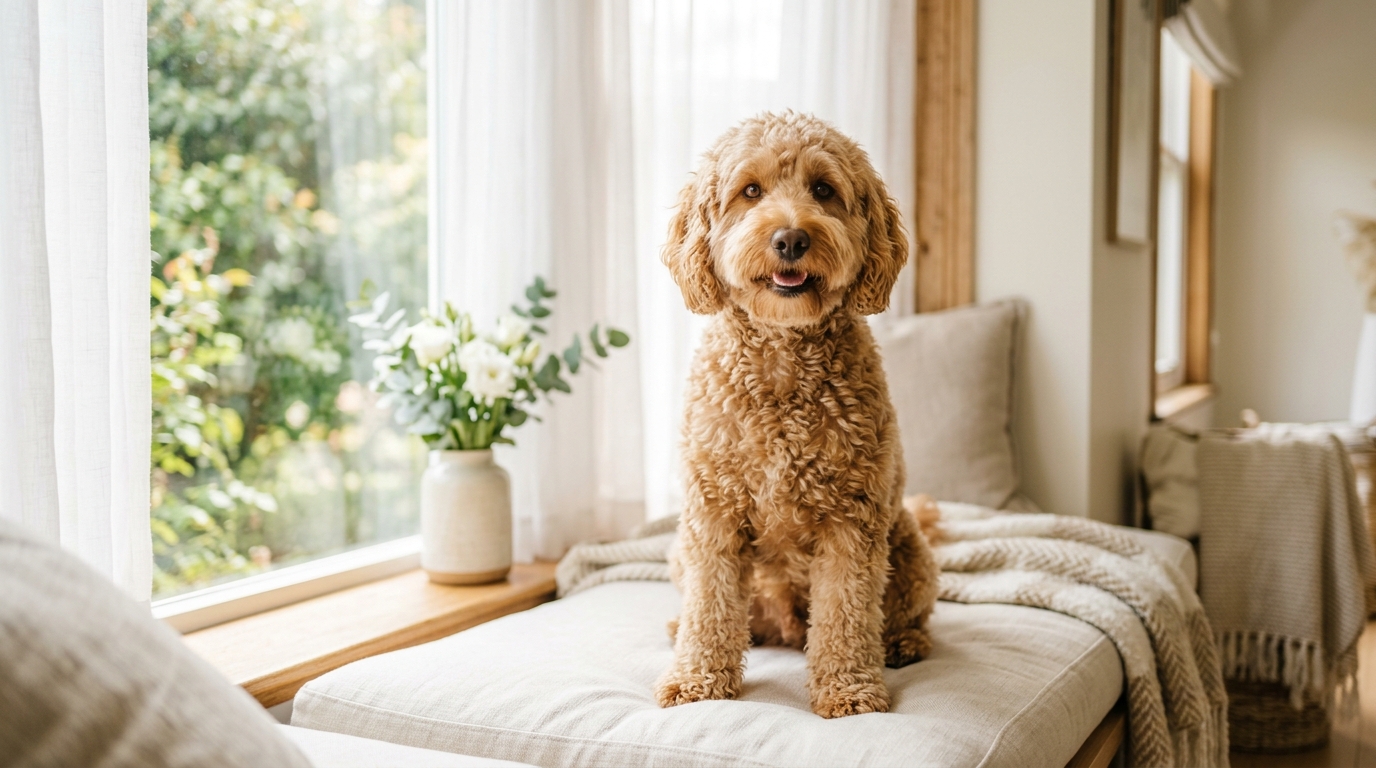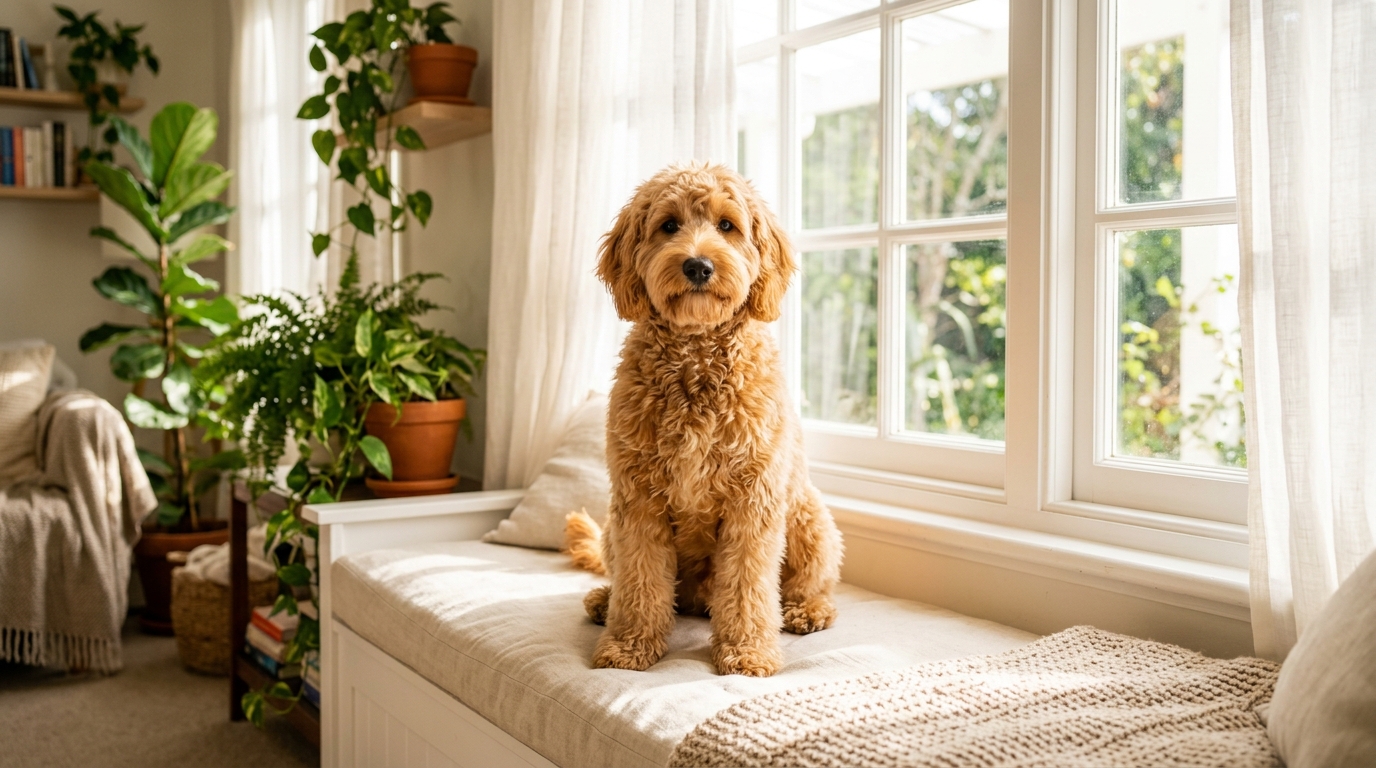
A small amount of clear or slightly rusty-brown discharge in the corner of your Goldendoodle's eye is usually normal, it is the eye clearing away dust and dead cells, and it is most obvious first thing in the morning. Thick white, yellow or green discharge, squinting, cloudiness, obvious pain, or one eye suddenly red are not normal, and those warrant a same-day vet call.
We live with three doodles, and between them we have wiped a lot of eyes over the years. The goal of this guide is simple: help you tell the everyday "eye boogers" from the discharge that means something, mostly by looking at color, amount, and whether the eye itself looks comfortable. This is doodle-specific because coat and face shape genuinely change what you see, and it is calm, because most eye discharge is minor.
If the watering that comes with the discharge is more about itch than infection, face rubbing, paw licking, seasonal flares, and you just want the shortlist of things that help, our roundup of the best allergy supplements for doodles is a good shortcut before the longer explanation below.
Is a little eye discharge normal in a Goldendoodle?
Yes. Healthy eyes produce tears constantly to stay lubricated, and a little residue gathers overnight in the inner corner. Wipe it away with a damp cloth and, if the eye underneath is bright, open and white, you are almost certainly looking at normal maintenance.
The same is true for labradoodle eye discharge and the other doodle crosses, Bernedoodles and Sheepadoodles included. Normal "doodle eye boogers" share these traits:
- Small amount, mostly in the morning
- Clear or slightly rusty-brown in color
- Wipes away easily and does not immediately return
- The eye is comfortable, no squinting, no rubbing, no redness
With three dogs, we do a quick morning face-wipe as part of the routine. Gösta, our easy one, has never given us a moment's trouble with his eyes, a soft cloth and he's done.
For a vet-written reference on the conditions mentioned here, the Merck Veterinary Manual is a reliable place to check.
Reading the color: a simple discharge chart
Color and consistency are the fastest clues. Use this as a first read, not a diagnosis, your vet confirms what it actually is.
| Discharge | What it often means | What to do |
|---|---|---|
| Clear, watery (both eyes) | Normal tearing, wind, dust, or allergies | Monitor; wipe gently. See vet if it persists or comes with itching |
| Rusty / red-brown crust | Porphyrin tear staining, cosmetic, from tears on light fur | Keep the area clean and dry; check hair length around the eyes |
| Thick white / gray, stringy | Possible irritation, dry eye, or early issue | Wipe and watch closely for a day; vet if it recurs or thickens |
| Yellow or green, gooey | Likely infection (conjunctivitis) or pus | Same-day vet |
| Watery + one eye red/squinting | Possible scratch, foreign body, or pain | Same-day vet |
Rusty tear stains: why cream doodles show them most
That reddish-brown streak below the inner corner is porphyrin staining. Porphyrins are natural pigments in tears; once tears sit on light fur and meet air, they oxidize to a rusty color. Cream and apricot Australian Labradoodles and Goldendoodles show it most simply because the stain contrasts with the coat, a chocolate or black Bernedoodle can tear the same amount and you'd barely notice.
Staining on its own is cosmetic. But heavy, worsening staining means excess tearing, and excess tearing has causes worth checking: hair in the eye, a shallow or blocked tear duct, or allergies. Keep the area clean and dry, and if it's getting worse, have your vet take a look.
Eyelashes and face hair: the doodle-specific irritant
Here is where the doodle coat matters. Fleece and curly coats grow hair around and into the eye area, and long face hair physically wipes across the eye surface every time your dog blinks or the wind blows. Some doodles also have lashes that turn inward. The eye responds the only way it can, by watering and rubbing.
Signs hair is the culprit:
- Watering that improves right after a groom and creeps back as hair grows
- Your doodle rubbing their face on furniture or carpet
- Visible hair touching the eyeball when you gently part the coat
The fix is regular grooming of the hair around the eyes. Leave this to your groomer or use rounded-tip work with great care, never point sharp scissors at your dog's eye. Keeping the face tidy also prevents mats near the eyes, which we cover in our doodle matting guide.
Could it be allergies?
It can. Environmental allergies, pollen, grass, dust, mold, often show as clear, watery eyes in both eyes, usually alongside face rubbing, paw licking and itchy skin. The Poodle line carries a documented predisposition to allergic skin disease, so some doodles do inherit an itchy, reactive tendency (and some don't, it's a predisposition, not a guarantee).
Watery eyes that flare seasonally, come with itching elsewhere, and settle out of season fit the allergy pattern. If that sounds like your dog, our overview of whether Goldendoodles have more allergies and the wider itchy skin & paws hub are good next steps. Food-driven reactions can also feed itch and tearing, if you suspect diet, food allergies in doodles walks through it. Either way, let your vet rule out infection and irritation first, because those need different treatment.
When is dog eye discharge serious?
If you take one thing from this article, take this list. Call your vet the same day if you see:
None of these are "watch it for a week" situations. A sudden change in one eye especially, where the other looks normal, points toward a scratch, a foreign body, or a pressure problem, all of which are time-sensitive. When in doubt, phone the clinic and describe the color and the squinting; they will tell you whether to come in.
What you can safely do at home
For normal, minor discharge only, no pain, no color change, no squinting:
- Wipe gently with a warm, damp, clean cloth, inner corner outward, a fresh section per eye.
- Keep the face hair trimmed around the eyes via your groomer.
- Keep the area dry after wiping, damp fur near the eye encourages staining and irritation.
- Note patterns, one eye or both? Morning only or all day? Seasonal? These details help your vet.
Do not put human eye drops, leftover antibiotics, or home remedies into your doodle's eye. If the eye needs medication, it needs the right one for the right cause, and that is a vet's call.
FAQ
Yes. A small amount of clear or slightly rusty-brown discharge collecting in the inner corner of the eye, most noticeable in the morning, is normal and simply the eye clearing dust and cells overnight. It wipes away easily and the eye underneath looks bright, open and comfortable. What is not normal is thick white, yellow or green gunk, discharge that keeps coming back through the day, or any discharge paired with squinting or redness.
The rusty-red-brown color comes from porphyrins, natural pigments in tears that stain light fur once they sit on the coat and are exposed to air. Cream and apricot Goldendoodles and Labradoodles show it most because of their coat color. It is a cosmetic issue on its own, but excessive tearing behind it can have a cause worth checking, hair irritating the eye, allergies, or a blocked tear duct, so heavy, worsening staining is worth a vet's look.
Call your vet the same day if you see thick yellow or green discharge, squinting or holding one eye shut, pawing or rubbing at the eye, cloudiness over the surface, one eye suddenly red or swollen, or obvious pain. These can signal infection, a scratch on the cornea, or pressure changes in the eye, and the eye is not an organ to take a wait-and-see approach with.
Yes, and it is common in the fleece and curly coats of Australian Labradoodles, Goldendoodles and Bernedoodles. Hair growing long around the eyes, or lashes turning inward, physically touches the eye surface and triggers watering and rubbing. Keeping the hair around the eyes trimmed by your groomer, never with scissors you point at the eye yourself, often reduces the tearing considerably.
They can be. Environmental allergies (pollen, dust, grass) often show as watery, itchy eyes alongside face rubbing, paw licking and itchy skin, and the Poodle line does carry a real predisposition to allergic skin disease. Clear, watery discharge in both eyes during allergy season points this way. Persistent or seasonal patterns are worth discussing with your vet, who can rule out other causes first.
Your next step
For everyday discharge, the plan is short: wipe gently, keep the face hair trimmed, keep the corners dry, and watch color and comfort. For anything on the same-day list, yellow-green discharge, squinting, cloudiness, a suddenly red eye, or pain, skip the home care and call your vet.
If the watering travels with itchy skin and paw licking, start with whether doodles are prone to allergies to figure out the bigger picture, and the itchy skin & paws hub collects the rest of the trail.