For a doodle, buy two scissors first: blunt-tip (ball-tip) safety scissors for the face and around the eyes, and curved scissors for the paws and the rounded teddy look. Those two do the riskiest, most-needed jobs on a doodle. Add thinning shears and a straight finishing shear later, once you clip regularly and want to blend and neaten. And whatever you use, keep a comb between the blades and the skin, and never cut a mat off at skin level: a tight mat is shaved off with clippers, not scissors.
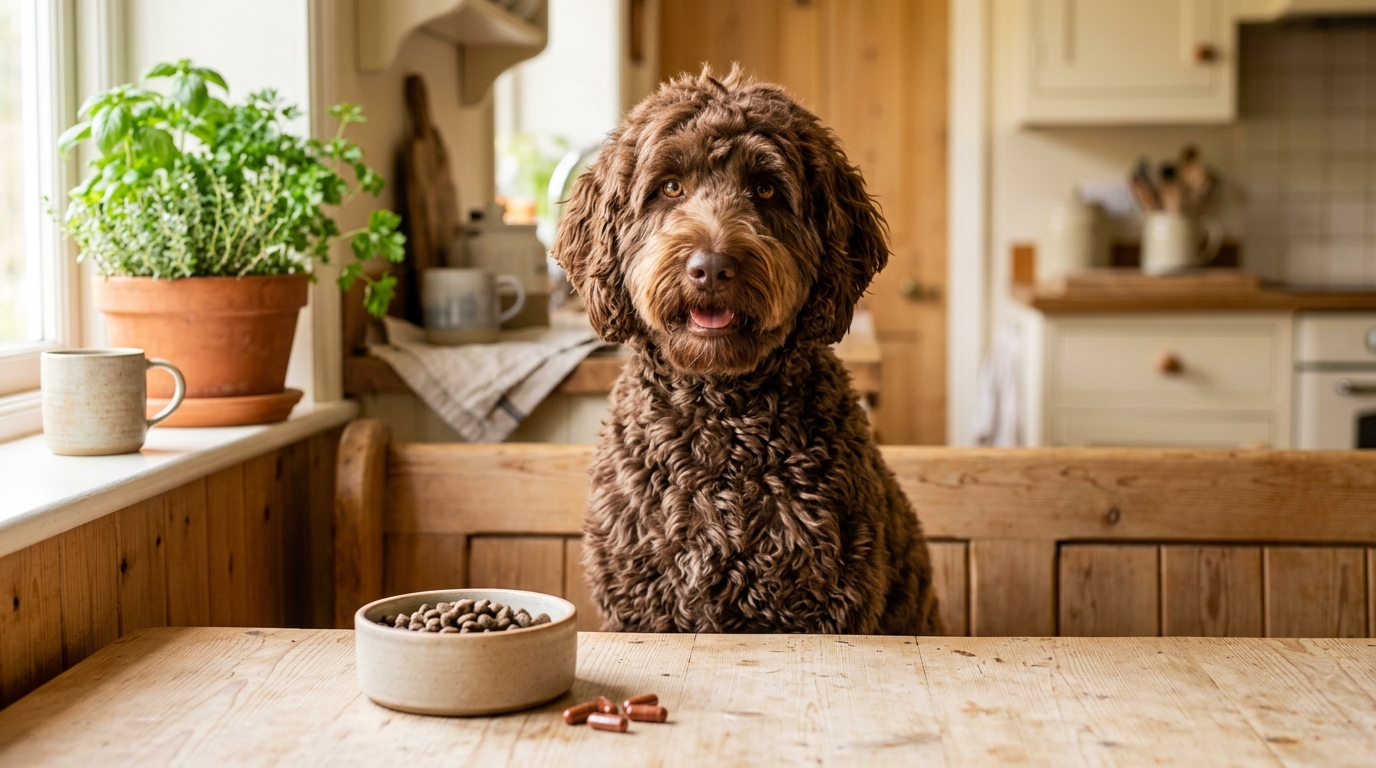
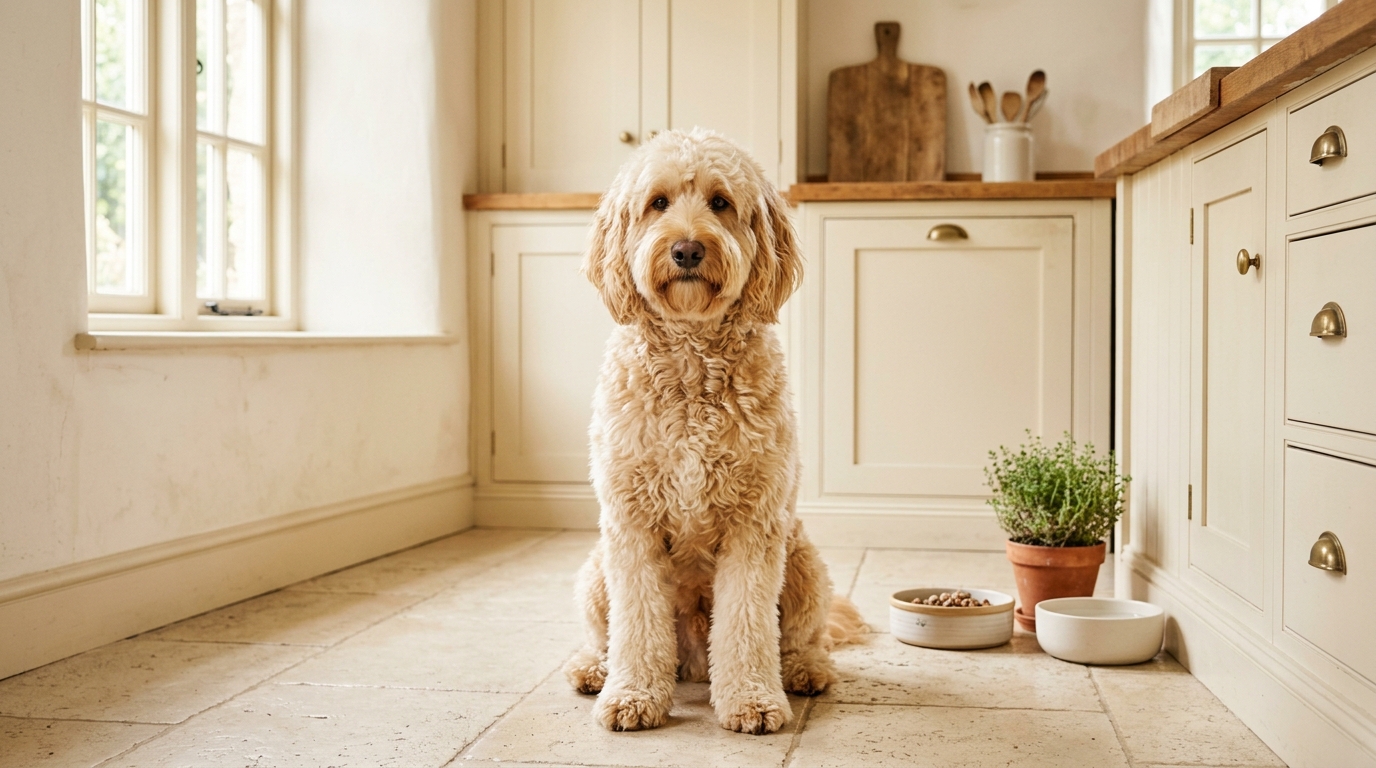
We trim all three of our Australian Labradoodles ourselves at home, and after years of it the pattern is clear: clippers do the big work, but the scissors are what save the fiddly, sensitive spots, the eyes, the muzzle and, above all, the paws. This guide walks you through which scissor type does which job, what to look for when buying, and the safety rules that keep a wiggly dog un-nicked.
If you already know you need a good set and just want the shortlist, jump to our Top Picks below. If you want the full home-trimming routine that these scissors fit into, see how to trim a doodle at home.
Which scissor does which job
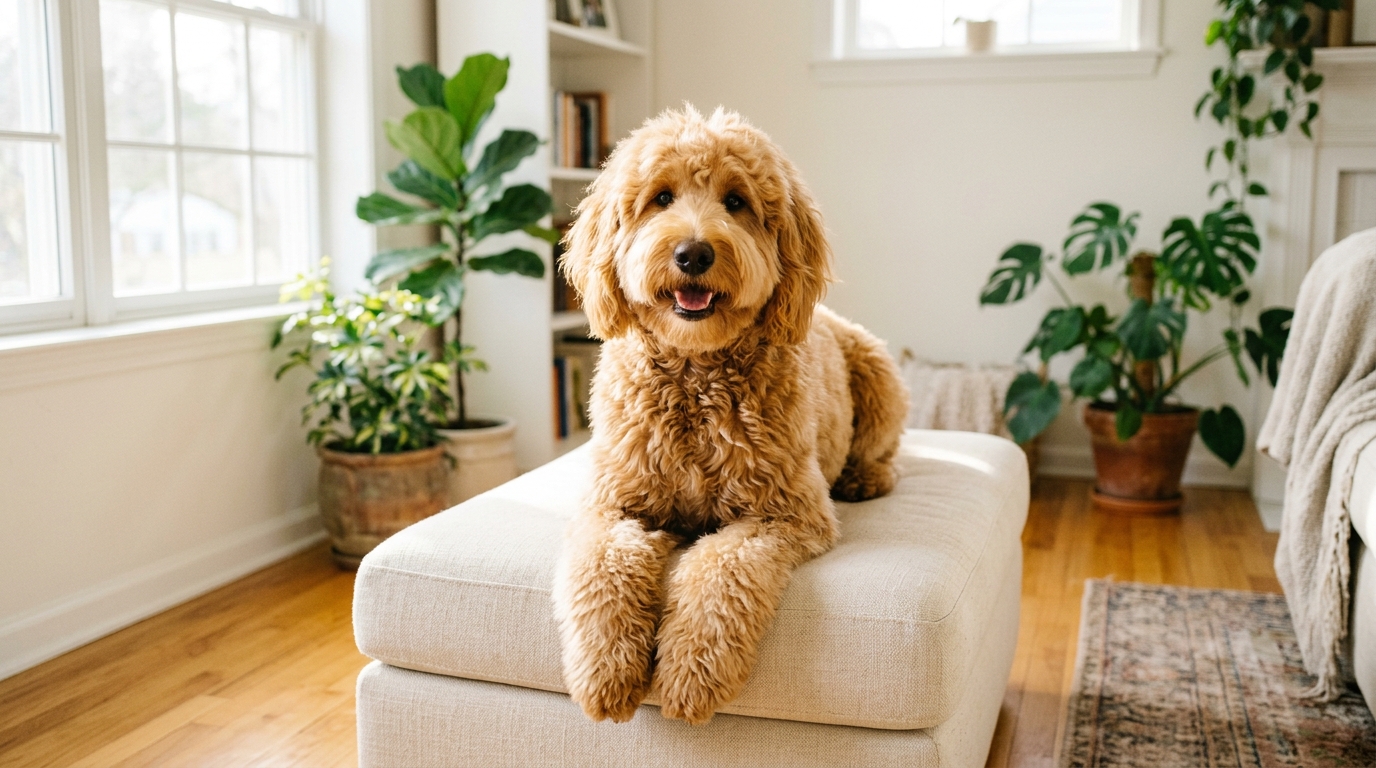
Doodle coats, the wavy and curly fleece and the curly wool of an Australian Labradoodle, plus the coats you see on Goldendoodles, Bernedoodles and Sheepadoodles, grow long and dense. That means different tools for different areas.
- Blunt-tip / ball-tip safety scissors for the face, around the eyes, the muzzle and ears. The rounded tip cannot jab the eye or nick a lip if your dog moves, which they will. This is the single most important scissor for a nervous dog or a beginner hand.
- Curved scissors for the paws, the feet and that rounded teddy-bear look. The curve follows the natural round of a paw or a head, so you get a soft shape without hacking flat lines into a curved surface.
- Thinning shears and chunkers for blending after clipping. Instead of cutting a hard line, they remove some hair and soften the edge where a clipped body meets a longer leg or skirt. Chunkers take out bigger chunks; thinning shears are finer.
- Straight finishing shears for clean final lines on legs, skirt and tail once the shape is set.
If you're buying one thing, buy blunt-tip safety scissors. If you're buying two, add curved scissors for the paws.
For general, vet-backed guidance on coat and skin care, the American Veterinary Medical Association is a reliable place to start.
Top Picks
We look for three things in a home doodle scissor: safety round tips for the face, a curved option for paws, and steel that survives dense curly coats. All four picks below are proven home-groomer sets; the right one depends on whether you want an all-in-one kit or a dedicated paw-and-face tool.
| Product | Best For |
|---|---|
| GLADOG Professional 5 in 1 Set | Best overall starter kit |
| Gimars Titanium 6 in 1 Set | Best for dense curly coats |
| TINMARDA 4-Piece Kit | Best for smaller hands |
| HASHIMOTO Curved Scissors | Best dedicated face & paw tool |
One buying note before the picks: a multi-piece kit usually costs little more than a single quality shear and gives you straight, curved and thinning tools in one box, the sensible way to start if you're new to home trimming. A dedicated curved scissor makes more sense once you already own a body set and just want a better tool for the fiddly work. Browse the current options in Amazon's pet grooming section to compare sizes and set contents.
The paws are the part that matters most
In our house the paws, and specifically the hair between the paw pads, are the hardest and most important part of the whole trim. Mats form down there where you can't easily see them, and they lead to constant paw licking (more in mats between doodle paw pads). Sven and Gunnar both have curly wool coats, and the between-the-pad mats are the ones that drive them to lick.
What to look for when buying doodle scissors
A few things genuinely matter and a lot of the marketing does not. Here's what to weigh:
- Blunt vs pointed tips. Blunt/ball tips for the face and any area near the eyes; pointed only if you're experienced and doing fine detail. For most home groomers, safety tips win.
- Length. Around 6.5 to 7 inch (16.5 to 18 cm) suits most standard doodles. Smaller hands, mini doodles or eye-area detail work are easier with 5.5 to 6.5 inch (14 to 16.5 cm).
- Steel quality. Better stainless (4CR and similar) or a titanium coating holds an edge longer against thick, gritty doodle fur. Budget steel cuts fine but dulls faster.
- Balance and finger rests. Scissors you'll hold for 30 to 40 minutes need to feel balanced; a removable finger rest and comfortable rings matter more than you'd think, especially for smaller hands.
- Left-handed options. True left-handed shears exist, worth seeking out if you're a lefty, because reversed blades genuinely handle better.
- Sharpening. Good shears can be professionally sharpened and last years; very cheap sets are essentially disposable.
How to use them safely
The rules that keep a wiggly doodle un-nicked are simple and non-negotiable:
- Always keep a comb between the blades and the skin (a good metal comb is in our best brushes for doodles). Slide a comb through the coat, lift the hair, and cut above the comb: the comb is your guard so the blade never touches skin.
- Point tips away from the eye and the paw pad, always.
- Cut small. Little snips beat one big confident cut you'll regret.
- Never cut a mat off at skin level. Mats sit tight against the skin and you can't see where hair ends and skin begins: a tight or pelted mat is shaved off with clippers, never scissored.
Scissors, clippers or trimmers: which do you actually need?
Most home groomers use all three, and they do different jobs. Clippers take down the body coat. Trimmers handle small tidy-ups between full grooms: paws, face, sanitary area, single mats. Scissors shape and finish.
For our two curly wool boys, Sven and Gunnar, we do not brush routinely: with curly wool, brushing never stopped the matting for us. What does the heavy lifting is the monthly bath with conditioner, plus feeling through their coats by hand daily or several times a week so no mat gets a foothold; any single mat we find gets clipped out right away. Roughly every 2 to 3 months (about four times a year) we clip the whole coat off short, and then scissor and clip the details. Gösta's wavy fleece is different: he gets brushed thoroughly and often and can be kept long. After a bath we skip the blow-dryer as a routine and use super-absorbent dog drying robes instead; drying a doodle coat to the skin with an ordinary hair dryer can take an hour without a high-velocity grooming dryer.
We learned the matting lesson the hard way. Gunnar was our first doodle, and his puppy coat was fairly straight and almost fleece-like, so we brushed him and thought we were on top of it. But with a poor brush and no real technique we were only skimming the surface, and when his adult curly coat came in he was matted all over underneath: we'd been brushing over the mats. That first home trim we had to shave him right down. It's exactly why we now check by hand rather than trust a surface brush, and why we say a tight mat is a clipper job, not a scissor job.
On tools: clippers take the body, scissors and a small trimmer do the detail. A cordless clipper only coped with Gösta's fleece for us; Sven's and Gunnar's curly wool was too tough, so we use a corded Andis with a #10 blade. Blades get hot, so we keep four #10s and rotate them as they heat up (we usually do all three dogs in one session). A small trimmer handles between the toes, the face and the sanitary area. A quality clipper is worth the outlay: a professional doodle groom typically runs around $100 to $150 per visit, check your local prices, so with several doodles the clipper pays for itself.
Nails are a separate tool again, see best nail clippers and grinders for doodles. Which combination is right depends partly on coat type: a curly wool coat can't realistically be kept long, while Gösta's wavy fleece can, with proper brushing. That's worth understanding before you buy anything, and our guide to trimming a doodle at home walks through how coat type changes the whole approach.
FAQ
Start with two: blunt-tip (ball-tip) safety scissors for the face and around the eyes, and curved scissors for the paws and the rounded teddy look. Those two tools handle the trickiest, most risk-prone areas on a doodle. Add thinning shears and a straight finishing shear later, once you are clipping regularly and want to blend and neaten.
Yes, for anything near the eyes and muzzle, blunt or ball-tip scissors are the safest choice because a doodle wiggles and the rounded tip cannot jab the eye or nick the lip if your dog moves. You lose a little precision compared with sharp points, but for a nervous dog and a beginner hand, that trade is well worth it.
For most home groomers, 6.5 to 7 inch (16.5 to 18 cm) scissors are the sweet spot: long enough to make clean lines on a standard-size coat, short enough to control around the face and paws. Smaller hands or mini doodles may prefer a 5.5 to 6.5 inch (14 to 16.5 cm) pair, and detail work around the eyes is easiest with shorter blunt-tip scissors.
Never cut a mat off at skin level with scissors, because mats sit tight against the skin and you can slice the skin badly without seeing it. Work a loose mat out with your fingers or a comb; a tight or pelted mat is shaved off with clippers and a suitable blade, which a confident owner can do at home. See a vet if there are sores, redness or broken skin under the mat. Mats are a welfare issue, not just a look problem.
Yes. Clippers do the bulk of the coat, but scissors and small trimmers do the detail work clippers cannot: around the eyes, the tricky spots between the paw pads, the sanitary area, and blending the edges where a clipped body meets a longer leg. Most home groomers use both.
Your next step
For the bigger picture of grooming a doodle, from brushing to bathing and drying, start with our doodle grooming guide.
Buy blunt-tip safety scissors and curved scissors first, keep a comb between the blades and the skin, and take small cuts. That alone will get you through the face and paws safely. When you're ready to put it all together into a full at-home routine, follow our step-by-step guide to trimming a doodle at home, and if you're pairing your scissors with small clippers for tidy-ups, our best dog trimmers for doodles guide covers those.