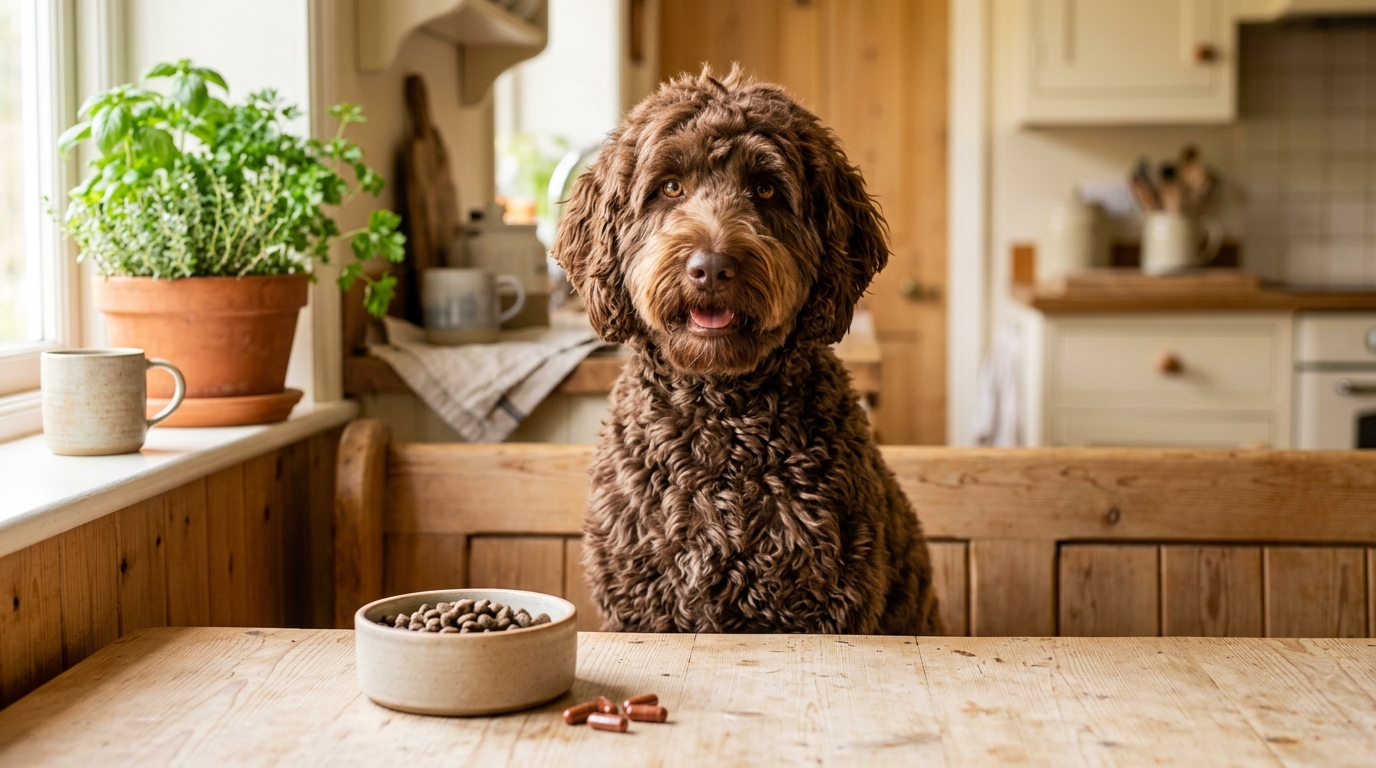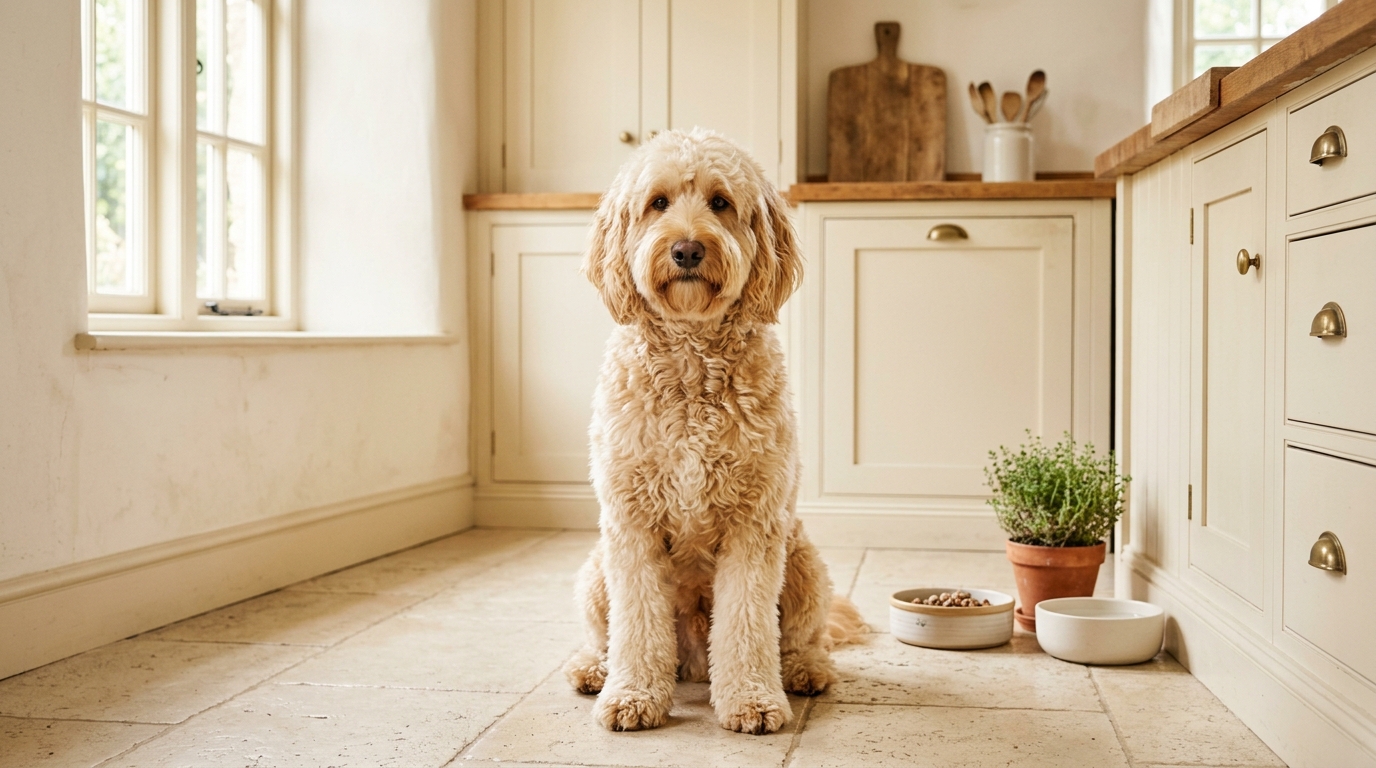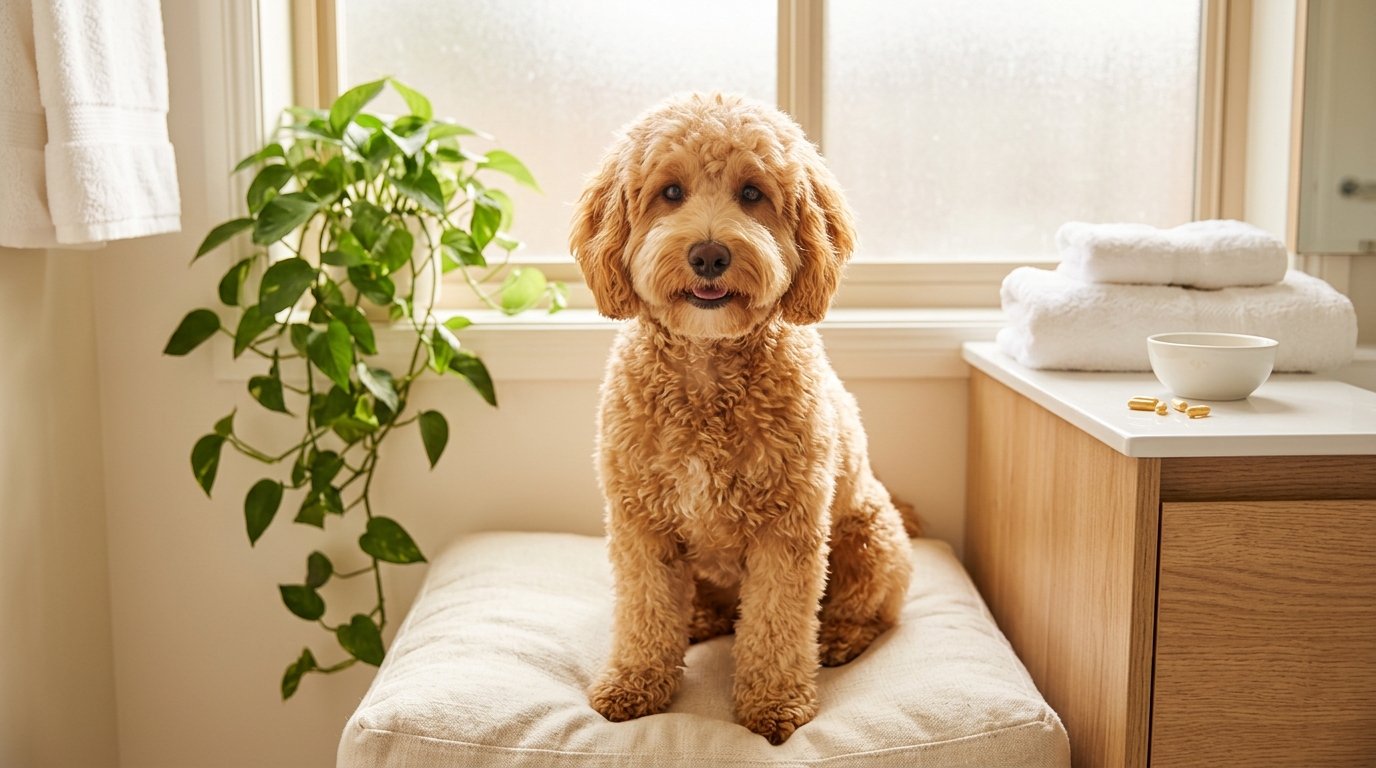
The best dog nail grinder for a doodle is a quiet, low-vibration model with a few speed settings so you can start gentle, but be honest with yourself about your dog's size first. Grinders are genuinely great on smaller dogs, thinner nails, and for smoothing the sharp edges after a clip, but for a big standard doodle's thick nails, plain scissor-style clippers stay the workhorse. Whatever tool you use, go little and often, stop well before the quick, and keep styptic powder within reach.
We trim all three of our Australian Labradoodles ourselves, Sven, Gunnar and Gösta, and nails are simply part of the same grooming session. And here is our own honest finding, which is why this guide is more nuanced than most: we do not use a grinder ourselves. We use ordinary scissor-type nail clippers. We tried a rotating electric grinder (an Andis two-speed model) because it would be so handy, but it simply did not have the power for our two bigger boys. Gunnar and Sven are standard size at around 55 lb (25 kg) each; Gösta is a medium at roughly 35-37 lb (16-17 kg). After a few attempts we went back to plain clippers.
Long nails are not just a cosmetic thing: they change how a dog stands, put pressure on the joints, and make every future session harder because the quick grows longer along with the nail. Keep on top of it and the whole job stays quick and low-drama. This guide covers where a grinder genuinely helps, where clippers win, how short is actually safe, black nails, and how to build tolerance in a sensitive dog, plus our researched grinder picks and our honest experience.
Grinder vs Clipper: Which Is Better for a Doodle?
Both have a place. The right tool depends on your dog's size and nail thickness as much as temperament, and this is where a lot of grinder guides oversell.
A grinder removes small amounts of nail at a time with a spinning sanding drum. It leaves a smooth, rounded edge (no snagged carpet or scratched arms), and because you take off so little per pass, it is much harder to hit the quick by accident. That makes it a lovely tool for smaller dogs, thinner nails, and for smoothing edges after a clip. The catch: on a big standard doodle with thick, hard nails, a consumer grinder can bog down and struggle to make progress, which is exactly what happened to us. If you already know you want a quiet grinder for a smaller dog or for finishing and just want the shortlist, jump to our Top Picks below.
A clipper cuts the nail in one motion. It is faster, silent, and has the power to get straight through a thick nail, which is why it remains the workhorse for standard doodles. Two styles exist:
- Scissor-style clippers work like pruning shears and give good control, these are what we use on all three of ours.
- Guillotine-style clippers push the nail through a hole against a blade. We don't use or recommend them: once the nail is through the hole you can't see exactly how much you are taking off, it is easy to catch the quick on a dark doodle nail, and a dull blade crushes the nail instead of cutting it. A wriggly dog makes all of that worse.
The trade-off with clippers is black nails. You cannot see the quick, so you go slowly and take a little at a time, never cut into the quick in one confident motion.
For general, vet-backed guidance on coat and skin care, the American Veterinary Medical Association is a reliable place to start.
Why We Went Back to Clippers
We really wanted the grinder to work, a rotating tool that smooths as it goes would be so much easier than clipping, especially across three dogs in one session. So we tried the Andis two-speed nail grinder. On paper it should have been ideal.
In practice it just did not have the power for our two standard boys. Gunnar and Sven, both around 55 lb (25 kg), have thick, tough nails, and the grinder struggled to make headway before it slowed. After a few attempts we accepted the honest answer and went back to ordinary scissor-type clippers, which get through their nails cleanly and quickly.
So take our researched grinder picks below in that spirit: a grinder can be a great choice for a smaller doodle, thinner nails, or as a finishing tool to smooth edges after clipping. What we cannot do is promise it will power through a standard doodle's thick nails as your main tool, because for us it didn't.
Top Picks
Again, to be clear: we use plain scissor-type clippers ourselves, nothing fancy, so the first pick is the exact plier-style clipper we use for our big doodles' thick nails, and the grinders after it are researched picks, not tools tested on our dogs. We chose them on the criteria that matter most for a sensitive doodle: low noise, low vibration, adjustable speed and a sensible port. The grinders are best suited to smaller doodles, thinner nails, or smoothing edges after a clip.
| Product | Best For | Rating |
|---|---|---|
| Millers Forge Plier-Style Nail Clipper | Best for thick standard-doodle nails (what we use) | 4.6 |
| Casfuy 2-Speed Nail Grinder | Best Overall / most-proven | 4.4 |
| Whisper Quiet Nail Grinder | Best for anxious dogs | 4.4 |
One thing worth knowing before you buy: check the port size against your dog, and set realistic expectations for thick nails. Most of these grinders have multiple ports (openings) for different nail thicknesses, a bigger nail needs the larger one, a mini uses the small one. Rechargeable models save you buying batteries but plan to charge before a multi-dog session. If you want to compare a wider range of styles and prices side by side, browse the dog grooming section on Amazon.
What Makes a Good Nail Grinder for a Sensitive Doodle
Doodles carry a real predisposition to being sensitive and reactive to handling, the Poodle side especially, and Gunnar is a perfect example: clever, a little fearful, and quick to notice tension in the room. So if a grinder suits your dog's size, the buying criteria are led by how the tool feels to a nervous dog, not by the spec sheet alone.
- Noise and vibration. The lower the decibel rating, the better. A whisper-quiet motor with minimal vibration is the difference between a dog who tolerates the tool and one who bolts.
- Speed settings. More than one speed lets you start slow and gentle and only speed up once your dog is relaxed. Great for building tolerance.
- Power and port size. A larger port (the opening you feed the nail into) suits thicker nails, and more motor power helps, but even so, expect a consumer grinder to work best on smaller or thinner nails.
- Battery life and charging. You do not want it dying mid-session with three dogs to do.
- Guard and dust. A guard keeps fur out of the drum and protects the nail; a dust cap catches the fine powder.
How Short Is Safe, and Black Nails
The goal is nails that do not touch the floor when your dog stands on a hard surface, no clicking as they walk. Take off a little at a time.
On light nails you can often see the pink quick through the nail; stop a few millimeters short of it. On black nails, which most doodles have, you cannot see the quick, so you go slowly and watch the cut surface. As you clip, take thin slices and check the cut face: as you get close, a small dark dot appears in the center. That dot is your signal to stop. Never cut into the quick.
How We Do Nails at Home, and Building Tolerance
Nails happen in the same session as the rest of the groom in our house, which keeps it low-effort. A lick mat smeared with something tasty keeps them still and gives them a job to focus on. Sven and Gunnar are more sensitive to handling, so one of us holds the dog and lifts the tricky feet while the other works the clippers. Gösta, true to form, just lets us do everything without a fuss.
Because we clip rather than grind, we take thin slices and stop well before the quick, little and often beats taking too much. If you own a grinder as a finishing tool, this is the moment to smooth the fresh edges after clipping.
Tolerance is trainable, and it is worth the small effort:
The principle we follow throughout our grooming is the same calm, consistent, never-punish approach we use for everything, you can read how that shapes our whole routine in our home-trimming guide.
Check between the pads at the same time
While you have the foot in your hand, feel between the paw pads. On a curly wool coat like Sven's and Gunnar's, mats between the pads are the hardest ones and a real driver of constant paw licking. Trim any mat out with a small trimmer right away. If your doodle is already licking paws, sort out the grooming cause first, then read our guides on paw licking after grooming and yeast on doodle paws to rule out the other common causes.
FAQ
It depends on your dog's size and nail thickness. For smaller doodles, thinner nails, and for smoothing edges after a clip, a grinder is a lovely, low-risk tool. But for a big standard doodle with thick nails, plain scissor-style clippers are the workhorse, we tried an electric grinder on our two 55 lb (25 kg) boys and it simply did not have the power, so we went back to clippers. Many owners keep both and use the grinder for the finishing pass.
Aim for nails that do not touch the floor when your dog is standing on a hard surface, you should not hear clicking as they walk. Take off a little at a time and stop as soon as you see a small dark dot in the center of the cut surface, which means you are getting close to the quick. It is always safer to do a little more often than to take too much in one go, and never cut into the quick.
Stay calm and press styptic powder (or a styptic pencil) firmly onto the nail tip for a few seconds; it stops the bleeding quickly. If you have no styptic powder, cornstarch or plain flour packed onto the tip works in a pinch. Keep your dog quiet for a little while so a clot forms. If bleeding does not stop after several minutes, call your vet.
Be realistic. We tried a rotating electric grinder on our two standard boys at around 55 lb (25 kg) each and it did not have the power to get through their thick nails, so after a few attempts we went back to plain clippers. Grinders are genuinely good for smaller dogs, thinner nails, and for smoothing the sharp edges after clipping, but for a full trim on a big doodle, do not expect a grinder to be your main tool.
Yes, and it is one of the most useful habits you can build. Mats between the paw pads are one of the hardest spots on a curly coat and a major cause of paw licking, so while you have the foot in your hand, feel between the pads and trim any mat out with a small trimmer. Doing nails and paw checks in the same session means nothing gets missed.
Next Step
Match the tool to the dog: scissor-style clippers for a big standard doodle's thick nails, a quiet grinder for a smaller dog or as a finishing tool to smooth edges. Keep styptic powder in the kit, and fold nails into your regular grooming session so they never get away from you. If you are ready to take on the whole groom yourself, bath, coat and all, our step-by-step guide to trimming a doodle at home walks through the tools and technique we use on all three of our dogs, and our matting guide covers those between-the-pad mats in more detail.