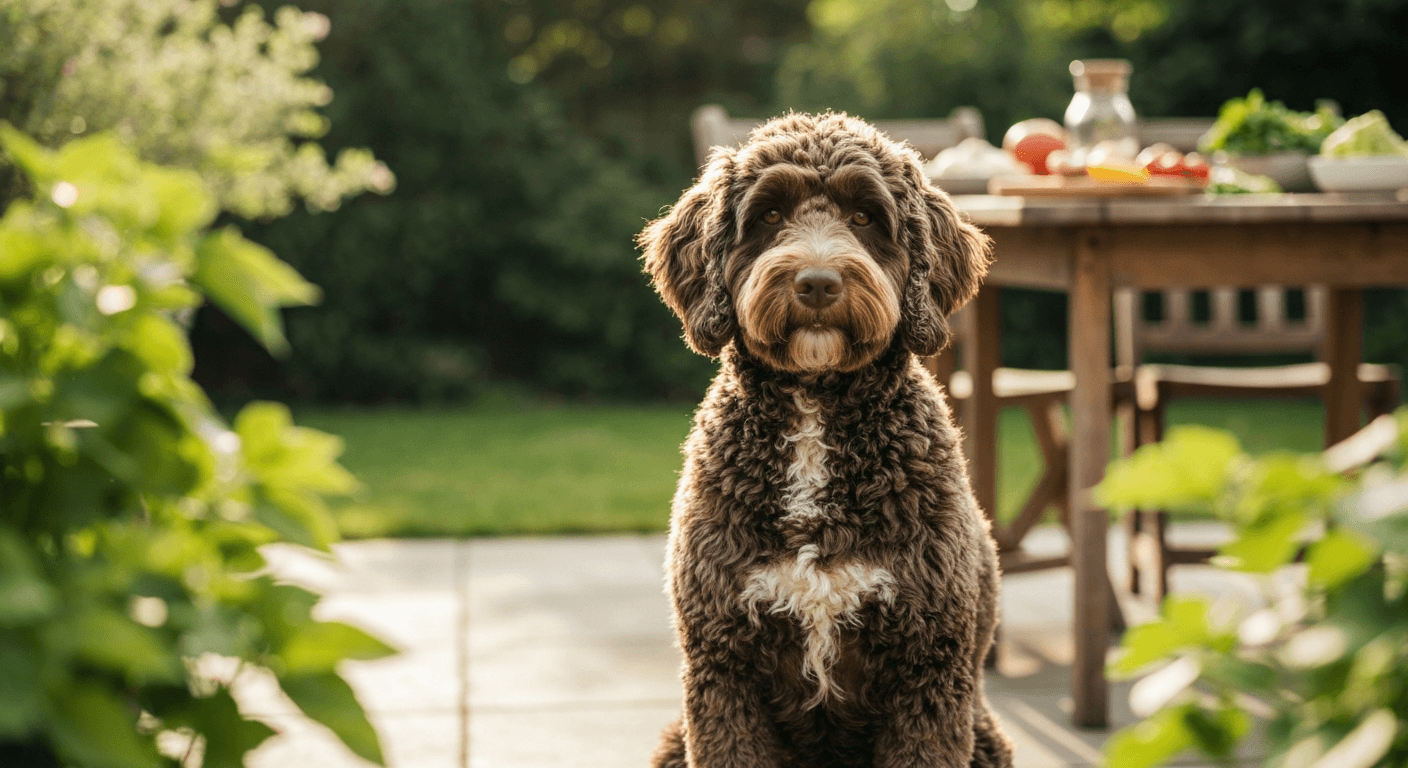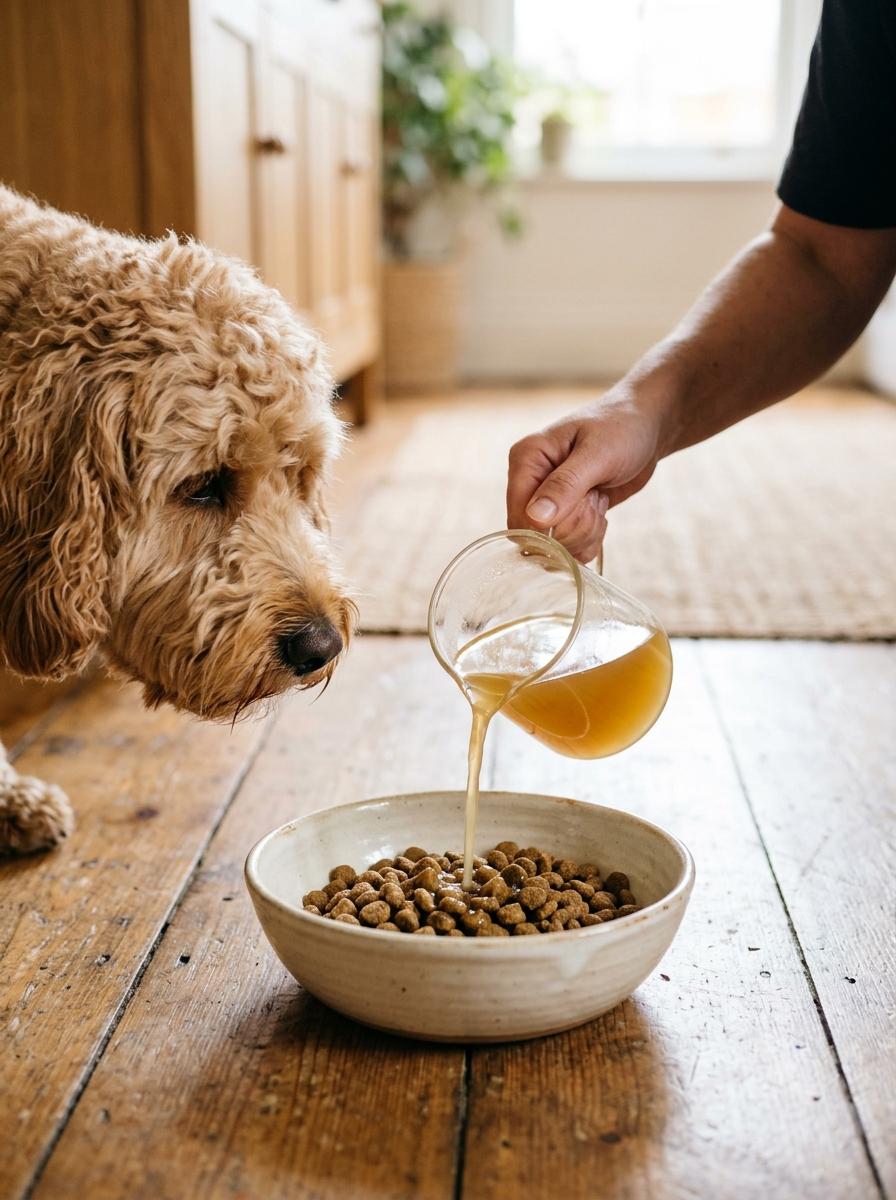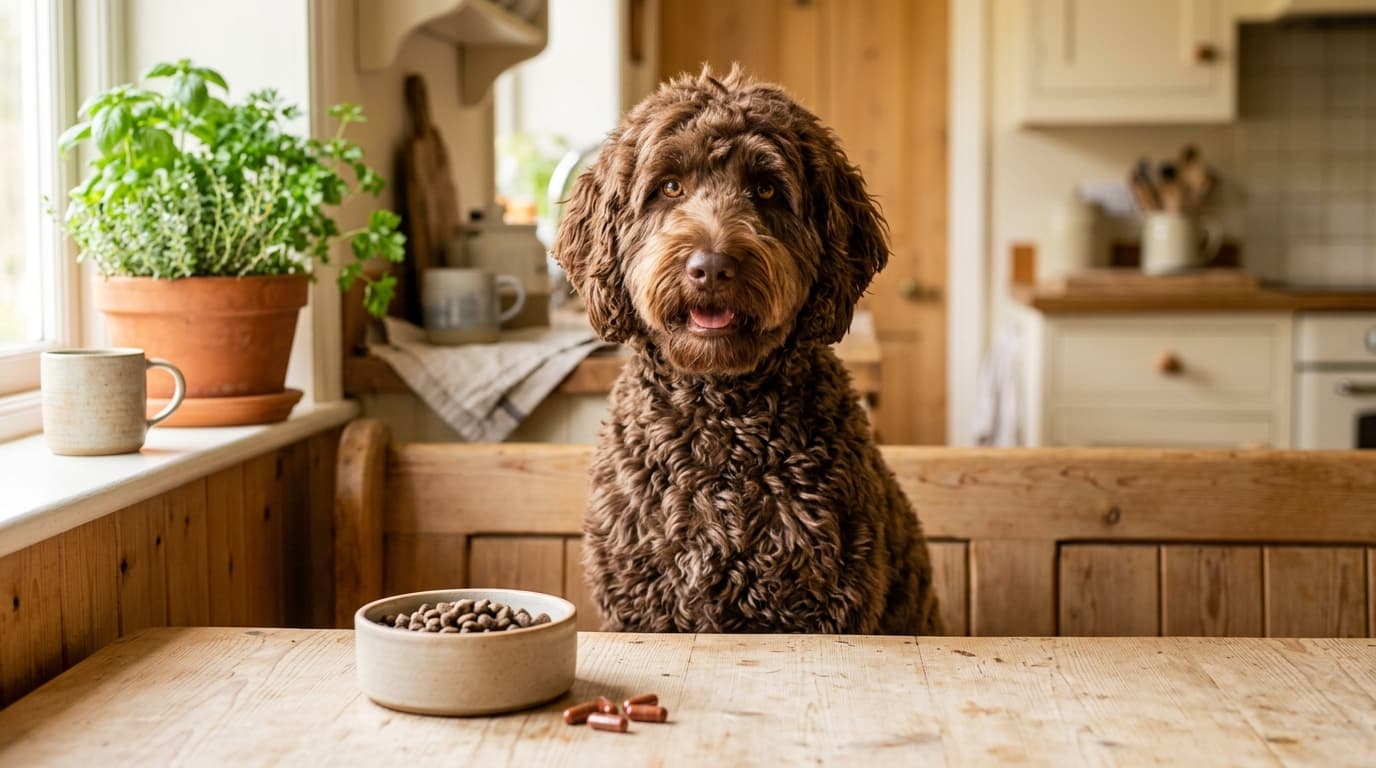
The healthiest dog dental chews are the ones that carry the VOHC seal, contain no chicken, no xylitol, no artificial colors and no BHA or BHT, and are sized so your doodle has to chew instead of gulp. Our screened picks are C.E.T. VeggieDent FR3SH, Whimzees Brushzees and ProDen PlaqueOff Turkey & Cranberry bones, plus Prodogi dental strips for dogs who swallow chews whole. A dental chew is an extra on top of daily brushing, never a replacement for it.
We brush our three Australian Labradoodles' teeth every day, and we will be honest: it is fiddly, imperfect work. That is exactly why we keep looking at what else helps. But the dental chew aisle is confusing. Half the bags say "vet recommended", many of the best sellers contain chicken or wheat gluten, and almost none of the big roundups ask whether a chew will upset a sensitive stomach.
So this page does the screening for you. Every pick passes the same ingredient gate we use for food, and we tell you where each one could still go wrong. If you are really after a single-ingredient natural chew (trachea, fish skin, rabbit ears) rather than a dental treat, that is a different job, and our best natural chews for doodles covers it.
What makes a dental chew actually work?
A dental chew cleans teeth mechanically: the dog's teeth sink into it and the texture scrapes plaque off the tooth surface as they chew. Three things decide whether that actually happens.
The VOHC seal, not the words "vet recommended"
"Vet recommended" is a marketing phrase. There is no standard behind it, and any brand can print it. The Veterinary Oral Health Council (VOHC) is different: it reviews the manufacturer's trial data and only lists a product that showed a real reduction in plaque, tartar or both. You can check any chew on the VOHC accepted products list in a minute, and we did that for every pick on this page.
The seal tells you the chew does something for teeth. It does not tell you the ingredients suit an allergic or sensitive doodle. That is the second check, and it is where most "best dental chews" lists stop short.
Texture and chewing time
A chew only cleans while it is being chewed. A good dental chew is firm enough to scrape but with some give, so the teeth sink in rather than snap it. Rock-hard items (antlers, hooves, nylon bones) can fracture a tooth, and a cracked tooth is painful and expensive. The thumbnail test from our natural chews page still applies: if you cannot dent it with your thumbnail, it is too hard.
Chewing time matters just as much. A Standard doodle who crunches a small chew in three bites and swallows gets almost no cleaning, and a swallowed chunk is a choking and blockage risk on top of that.
Size for a Mini, Medium or Standard doodle
This is where doodle owners go wrong most often, because doodles vary so much in size. Buy by your dog's actual weight, not the "doodle" label, and if your dog sits near the top of a size band or tends to gulp, go up a size. Our Mini vs Medium vs Standard doodle guide gives typical weight ranges if you are not sure where your dog falls.
- Mini doodles (roughly 15 to 30 lb, 7 to 14 kg) usually sit in the small or medium bands.
- Medium doodles (around 30 to 45 lb, 14 to 20 kg) are usually medium; our Gösta, at about 35 to 37 lb (16 to 17 kg), would sit here.
- Standard Australian Labradoodles, Goldendoodles and Bernedoodles (45 lb, 20 kg and up) often need the large size. Our Gunnar and Sven are both around 55 lb (25 kg).
Why so many popular dental chews fail a chicken-free check
When we read the labels of the best-selling dental chews, the same problems kept turning up. Look at the whole ingredient list, not the flavor on the front.
One honest note first: we screen for chicken because Gunnar reacts to it, and many doodles share that sensitivity. If your dog does fine on chicken, you can choose more freely, and the big VOHC-accepted names are open to you as long as the other checks below (size, calories, colors, how your dog's stomach handles them) still pass.
- Chicken in a hidden form. Chicken, chicken meal, chicken fat, "poultry flavor" and "poultry digest" show up in many mainstream chews, including some with a "fresh breath" or mint name on the front. For a dog like our Gunnar, whose trigger is chicken, a daily chew is a daily exposure. Our chicken allergy guide explains why one small source can keep symptoms going.
- Wheat gluten and wheat flour. These give many chews their bendy texture. Wheat is not a problem for every doodle, but it is one of the common ingredient triggers, and if you are already avoiding it in food, a chew should not sneak it back in.
- Artificial colors. Bright green does not clean teeth. We skip anything with synthetic dyes or titanium dioxide.
- Synthetic preservatives and sweeteners. BHA, BHT and ethoxyquin are a no for us, and xylitol is dangerous to dogs; none of our picks contains it.
If you are running an elimination diet, remember that a dental chew counts as food. Ask your vet before adding any chew during the trial, because one unplanned ingredient can muddy weeks of work.
Top Picks: the healthiest dog dental chews for doodles
Every pick below is on the VOHC accepted list (except the strips, which we explain), contains no chicken or poultry in any form, no xylitol, no artificial colors and no BHA or BHT, and gets an honest note on how it could sit with a sensitive stomach. These are researched picks: our own dogs have not tried them.
| Product | Best For | Why It Fits |
|---|---|---|
| C.E.T. VeggieDent FR3SH (Medium) | Best for Confirmed Allergies | VOHC accepted, no animal protein, no wheat gluten |
| Whimzees Brushzees (Medium) | Best Short Ingredient List | VOHC accepted, plant-based, no grain, no flavorings |
| ProDen PlaqueOff Dental Bones, Turkey & Cranberry | Best Meaty Chew Without Chicken | VOHC accepted, turkey as the only meat, natural colors |
| Prodogi Dental Strips | Best Non-Chew Option for Gulpers | No chicken, no xylitol, for dogs who bolt hard chews |
One buying note before the picks: with dental chews, the count per bag is the number to compare, not the weight, because you give one chew a day at most and the size you need changes how many chews you get. A large bag is only good value if your dog actually does well on the chew, so buy the smallest pack first, watch the stool for a week, then stock up. Keep the bag sealed so the chews do not dry out and turn hard. You can compare pack sizes and sizes side by side in Amazon's pet supplies section.
Dental chews vs single-ingredient natural chews
These two get lumped together, but they do different jobs. A dental chew is a formulated treat designed and tested to scrape plaque during a short daily chew, and the VOHC seal is how you know it was tested. A single-ingredient natural chew (beef trachea, cod skin, rabbit ears, or the dried horse scalp our dogs get now and then) is mostly enrichment and long chewing time, and its effect on the teeth comes from the gnawing itself rather than from a tested design.
For a raw-fed doodle, raw meaty bones and natural chews are the backbone, and that is what ours get. A dental chew makes the most sense for a kibble-fed dog, a dog who cannot have bones, or a family who wants a quick daily habit after the evening walk. Neither is a substitute for a toothbrush. If you want the full comparison of natural chews, including which ones are too hard or too fatty, that lives on our natural chews page.
Calories, gulping and sensitive stomachs
This is the part retailer roundups skip, and it is where a "healthy" chew can turn into a problem.
Calories add up. A dental chew is a treat, and a large one can be a meaningful part of a doodle's daily energy, especially for a Mini. Check the calories on the pack and trim the meal a little on chew days rather than stacking the chew on top. If your dog is already carrying extra weight, our healthy weight guide shows how to tell.
Gulping is the real safety issue. Some doodles treat a chew as a race. A dog who swallows a large piece whole risks choking or a blockage, and gets no cleaning out of it anyway. Size up, hold the end of the chew for the first few sessions, and if your dog still bolts it, a dental chew is not the right tool for that dog. The same habit at meal times is worth working on with a slow feeder or portion tool.
Sensitive stomachs need a slow start. Starchy chews and sugar alcohols can loosen the stool of a dog who reacts to every change. Our Sven, the sensitive stomach of the three, had loose stool after every food change in his first year, and that is the pattern we have in mind: one new thing at a time, half a chew to begin with, and a look at the next day's stool. If it goes soft, stop for a few days, as our guide to diarrhea after a food change explains.
Dental chews add to brushing, they never replace it
We want to be clear about this because the marketing often is not. The Merck Veterinary Manual names daily tooth brushing as the best thing an owner can do at home, and a chew is a helper on top of that.
Here is what that looks like in our house. We brush all three dogs' teeth every day, usually with Virbac enzymatic dog toothpaste, which is the one our dogs like best (never human toothpaste). We have tried small dog brushes, finger brushes and even an electric toothbrush; the electric one did not work for us, because Sven never got used to it and Gunnar only partly, while Gösta accepts anything. On top of brushing they get raw bones. And still, Gunnar and Sven have needed professional cleanings under anesthesia (Gösta is not three yet): the first at about three years old, then every other year, and each time there was some tartar to remove. Brushing a dog's teeth is nothing like brushing your own, and raw feeding did not make the vet cleanings unnecessary.
So a chew earns its place if it adds some extra scraping on the days your brushing is less thorough than you would like. If you want the whole routine (brushing technique, what helps and what does not), start with our doodle dental care guide. If bad breath is what brought you here, check both the diet and the teeth: our home remedies for bad dog breath and why does my doodle smell cover both sides. And if a cleaning is already on the cards, our guide to dog teeth cleaning cost explains what the vet actually does. For older dogs, teeth are part of overall comfort, which our senior doodle care guide touches on too.
FAQ
The healthiest dog dental chews are ones that carry the VOHC seal of acceptance, contain no chicken or poultry, no xylitol, no artificial colors and no BHA or BHT, and are sized so your dog has to chew them rather than swallow them. For allergy-prone doodles we like C.E.T. VeggieDent FR3SH, Whimzees Brushzees and ProDen PlaqueOff turkey and cranberry bones, all of which appear on the VOHC accepted products list.
Not necessarily. Vet recommended is a marketing phrase with no fixed standard behind it. The VOHC seal is different: the Veterinary Oral Health Council only lists a product after reviewing trial data showing it reduces plaque, tartar or both. Check the VOHC accepted products list rather than trusting the front of the bag.
Many are not, because chicken, poultry flavor, chicken fat or poultry digest are common in popular dental chews. Read the full ingredient list, not just the flavor name. A plant-based chew such as C.E.T. VeggieDent FR3SH or Whimzees Brushzees has no animal protein at all, and ProDen PlaqueOff bones use turkey, which is not chicken.
No. Daily tooth brushing with a dog toothpaste is still the most effective thing you can do at home, and the Merck Veterinary Manual names daily brushing as the best option. A dental chew adds some mechanical cleaning on top of that. Even with daily brushing and raw bones, our own dogs still need professional cleanings under anesthesia.
Follow the feeding guide on the pack for your dog's weight, which for most dental chews is one a day at most, and count the chew as part of the day's food. If your doodle is watching their weight or has a sensitive stomach, a few times a week is a sensible starting point, and you can build up once you know the chew agrees with them.
Where to go next
Pick one chew that passes the ingredient check, size it to your dog's real weight, introduce it slowly, and keep the toothbrush as the main event. For the full home routine, our doodle dental care guide is the next step, and our best products hub collects every other screened pick on the site.