The home remedy that works best for bad dog breath is daily toothbrushing with a dog toothpaste, and for a doodle, a daily wipe of the beard and lips as well. Chews and water additives that carry the VOHC seal can help on top of that. Popular tips like coconut oil and parsley only mask the smell, while baking soda and human toothpaste are unsafe. If the breath is still bad after a week of this, it is a vet question.
Here is the part most lists skip: a healthy doodle's breath should not smell strongly. A little "dog food" smell right after dinner is normal. A smell that makes you pull back when your dog yawns is a signal, not a doodle trait, and it usually points to one of two places: the teeth or the food.
This guide ranks the remedies honestly by evidence, gives you a 7-day plan that tests the teeth and the diet side by side, and lists the red flags that mean you should stop experimenting and call your vet. If the smell is coming from the coat, the ears or the paws rather than the mouth, our guide to why a doodle smells covers the whole dog.
Why does my doodle's breath smell?
Bad breath in dogs has two main causes, and in our experience they are equally important. Never check one and skip the other.
Cause 1: the teeth and gums
Plaque is a soft film of bacteria that builds up on teeth every day. Left alone it hardens into tartar, and the bacteria under the gum line produce the rotten, sulphur-like smell most owners notice. The Merck Veterinary Manual's guide to dental disorders of dogs describes gingivitis (red, swollen gums that bleed on contact) and notes that bad breath is common at this stage, and that gingivitis can be reversed with proper tooth cleaning before it moves on to periodontitis.
Other dental sources of a bad smell:
- Food trapped between teeth or wedged along the gum line.
- A cracked or broken tooth, which can become infected.
- Tartar that brushing cannot reach, which only a professional cleaning removes.
If you already suspect the teeth and want the shortcut, the chews we would shortlist are in our guide to the healthiest dental chews for doodles, all chicken-free.
Cause 2: the food and digestion
Diet is the cause owners overlook. A food or treat that does not suit your dog, a rich or fatty meal, a new protein, or something scavenged on a walk can all change the breath for a day or more. So can an upset gut. This kind of breath often comes and goes with meals, which is exactly what the 7-day plan below helps you spot.
Gunnar is our example here. He has had short spells of bad breath, sometimes fishy, that pass in a day or two. We link those to something he ate, not to his teeth, because they come and go too quickly for a dental problem and his teeth are in good shape overall. That is how we learned to look at the bowl before we look for a toothbrush.
The doodle part: the beard
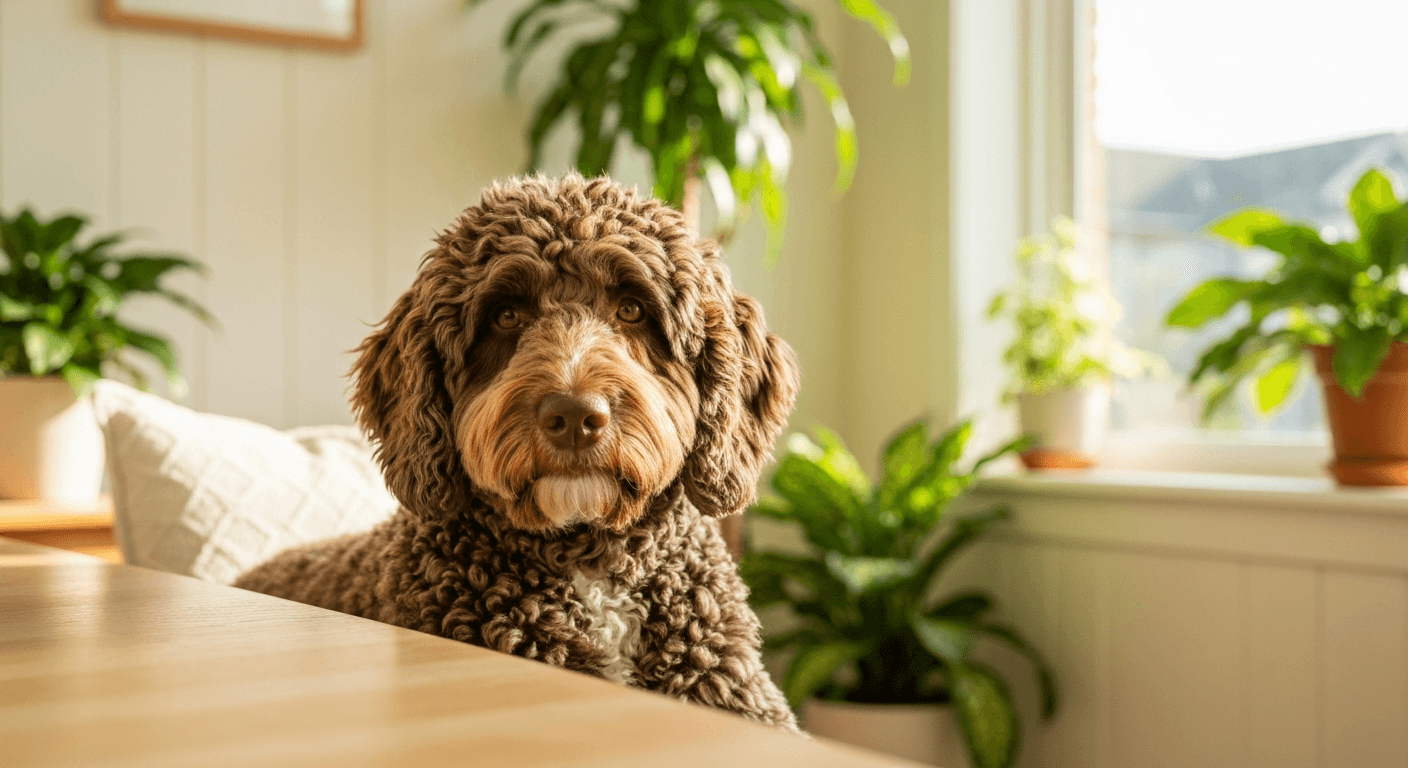
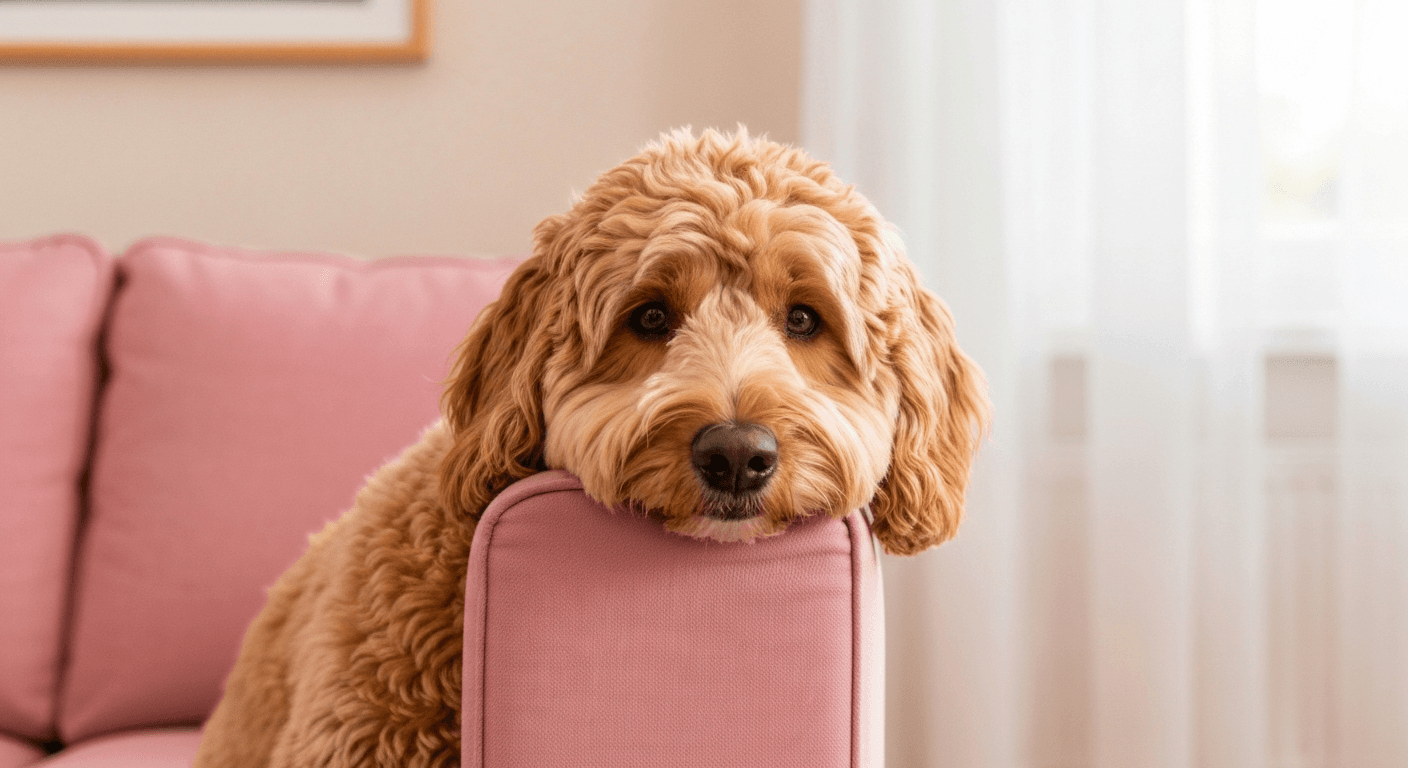
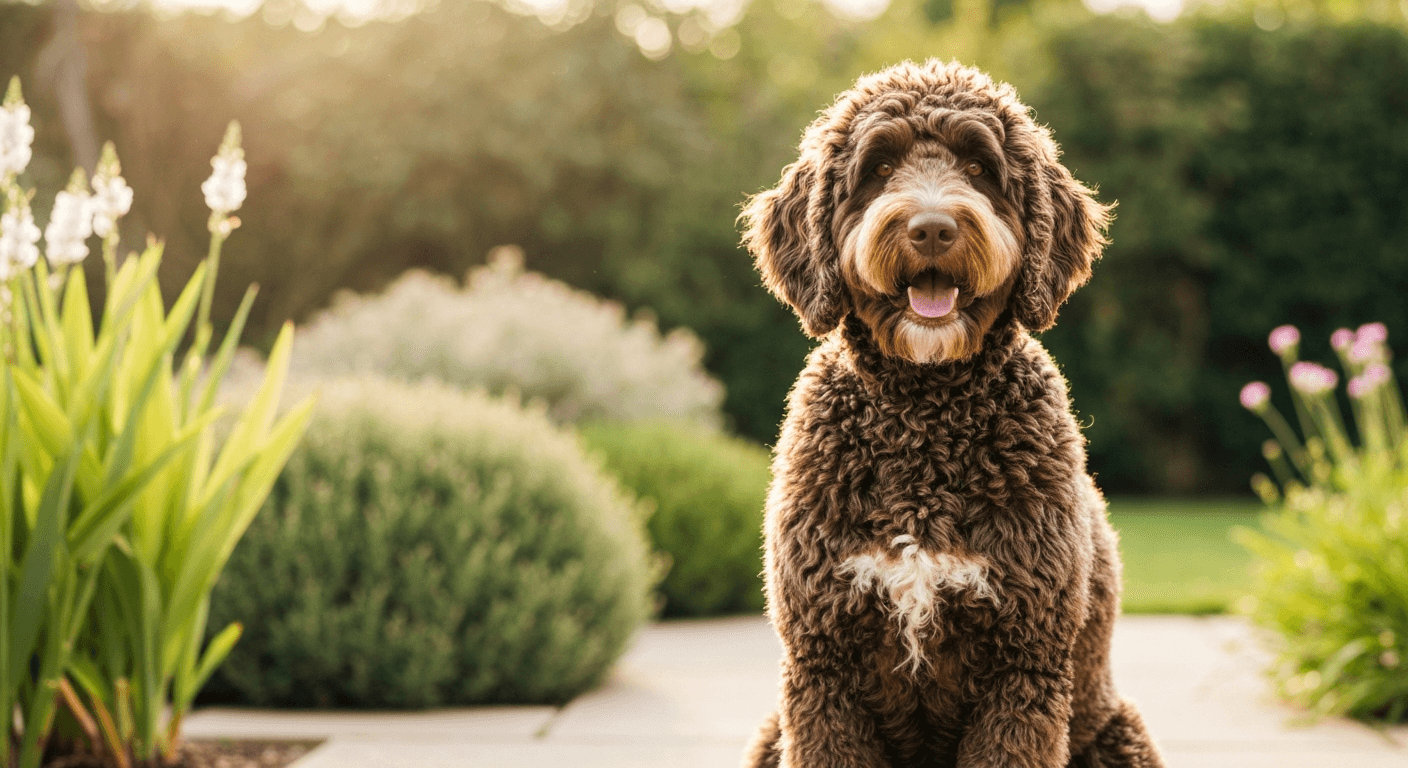
This one is specific to our dogs. An Australian Labradoodle, Labradoodle, Goldendoodle, Bernedoodle or Sheepadoodle with a furnished face has a beard and moustache that soak up water, saliva and food at every meal. A damp, food-crusted beard can smell remarkably like bad breath. Lift the lip and sniff the teeth, then sniff the beard: owners are often surprised which one it is. Keeping the hair around the mouth tidy helps, and our guide on how to trim a doodle at home shows how we tidy the face.
Small doodles and older doodles
Mini doodles have the same number of teeth in a smaller mouth, and small dogs in general are more prone to dental disease, so start the habit early. Older doodles also deserve a closer look: dental disease builds over years, and a senior doodle with new bad breath should have a vet dental check rather than a home remedy.
Home remedies for bad dog breath, ranked by evidence
Most "natural remedies for bad dog breath" lists treat every tip as equal. They are not. This is how we rank them, based on what the evidence and the vets say, plus our own trial and error with three dogs.
| Remedy | What it does | Evidence | Our verdict |
|---|---|---|---|
| Daily toothbrushing with dog toothpaste | Removes plaque before it hardens | Strong, the standard vets recommend | Do this first, every day |
| Wiping the beard and lips | Removes food and saliva from the face hair | Common sense, no studies needed | Daily for any bearded doodle |
| VOHC-accepted chews | Scrape or reduce plaque or tartar | Product data reviewed by VOHC | Good add-on, not a substitute |
| VOHC-accepted water additives | Reduce plaque in some products | Product data reviewed by VOHC | Only if your dog still drinks normally |
| Diet review | Removes a food that does not suit the dog | Our experience, ask your vet | Worth testing alongside brushing |
| Seaweed dental powder | Added to food | Varies by product, check for the VOHC seal | Optional extra |
| Coconut oil | Claimed to "freshen" | No good evidence | Skip, adds fat |
| Parsley or mint | Masks odor briefly | Masking only | Harmless in tiny amounts, fixes nothing |
| Baking soda | Abrasive, sold as a DIY paste | Not recommended | Unsafe, do not use |
| Human toothpaste | Foams, may contain xylitol | Not recommended | Never use, xylitol is toxic to dogs |
1. Brush the teeth every day
The AVMA's pet dental care advice puts home care, above all brushing, at the center of keeping a dog's mouth healthy. Daily is the goal, because plaque starts to harden within days.
We brush all three of our dogs' teeth every day. We have tried a lot of tools: small dog toothbrushes, finger brushes, rotating brushes and even a human electric toothbrush. The electric one did not work for us and we stopped fighting it: Sven never got used to it, Gunnar only partly, and Gösta, who accepts anything, did not care either way. Our toothpaste is usually Virbac enzymatic dog toothpaste, which our dogs like best of everything we have tried. If your dog reacts to chicken, skip the poultry flavor (it contains poultry digest); the malt flavor has no poultry. Never use human toothpaste.
Honestly, brushing a dog's teeth is fiddly. It is nothing like brushing your own, and you will miss spots. Do it anyway: an imperfect daily brush beats a perfect weekly one. The full technique, tool by tool, is in our doodle dental care guide.
2. Wipe the beard and lips
After meals, wipe the beard and the corners of the mouth with a damp cloth, then let the hair dry. It takes ten seconds and often fixes "bad breath" that was never in the mouth at all.
3. Add a VOHC-accepted chew
The Veterinary Oral Health Council reviews manufacturers' data and awards its seal to chews, diets and additives that show they reduce plaque, tartar or both. It does not test products itself, but the seal is still the best filter available. Always supervise chewing and pick the size for your dog's weight.
Our own dogs eat raw food and raw bones, plus now and then a natural chew such as dried horse scalp, a carefully chosen pressed chew (single-ingredient beef hide, nothing added) or a vegetable dental stick, which they love. If you are raw feeding, our natural chews guide explains how we choose.
4. Water additives, with one caution
Some water additives carry the VOHC seal. We tried one and our dogs simply left the water undrunk, so we stopped. If you try one, watch that your dog still drinks normally. Clean breath is not worth a dog that avoids its water bowl.
5. Seaweed powder, as an optional extra
We have sometimes added a seaweed dental powder, ProDen PlaqueOff Powder, to our dogs' food, but not continuously. It is very high in iodine, so skip it for a dog with a thyroid condition. Products differ, so check whether the one you choose carries the VOHC seal, and treat it as an extra rather than the plan.
The 7-day at-home plan: teeth and diet side by side
This is the plan we would give a friend who asked "why does my doodle's breath smell?" It does two things at once, so that by day 7 you know which way to look. Keep a simple breath log on your phone: morning and evening, rate the smell from 0 (fresh) to 3 (makes you pull back), and note what your dog ate.
How to read the log on day 7:
- Better within a few days of brushing and wiping, and steady? The teeth and beard were the main source. Keep brushing daily and book a routine vet dental check if you saw tartar on day 1.
- Spikes after particular meals, treats or scavenging, then settles? Food is playing a part. Look at what was in the bowl on the bad days, and if a particular protein or treat keeps showing up, talk to your vet about it. Our guide to common food triggers is a good place to start, and if you change foods, switch gradually with the 7-day food transition plan.
- No change at all after seven days of brushing and a steady diet? Stop experimenting and book a vet visit. Breath that does not respond to brushing often means tartar under the gum line, a bad tooth, or something outside the mouth.
Diet and bad breath: what our dogs taught us
Our three Australian Labradoodles eat raw at home, and raw meaty bones are part of that. People sometimes assume raw feeding means you never deal with teeth. That has not been our experience. Even with daily brushing, raw food and bones, Gunnar and Sven have both had some tartar removed at their professional cleanings. Raw feeding does not make vet cleanings unnecessary. If you are weighing it up, we lay out the honest trade-offs in raw diet for doodles: pros and cons.
What the bowl does change, in our experience, is the day-to-day breath. A diet that suits the dog tends to come with an unremarkable mouth smell. A food or treat that does not suit the dog, or a rich one-off meal, can show up in the breath for a day or two, which is exactly the pattern we see in Gunnar's short fishy spells. Breath that comes with tummy trouble (gurgling, soft stool, vomiting) belongs with the gut, and our sensitive stomach guide is the place to start.
Bad dog breath causes that need a vet
Some breath changes are not a home remedy problem at all. Veterinary sources point out that breath can reflect disease elsewhere in the body, not just the teeth. Book a vet visit if you notice:
- Sweet or fruity breath, which can be a sign of diabetes.
- Ammonia or urine-like breath, especially with more drinking, which can point to the kidneys.
- Very foul breath with vomiting, not eating or yellowish gums, which can point to the liver.
- Drooling, bleeding or bright red gums, or a loose or broken tooth.
- Pawing at the mouth, chewing on one side or dropping food, which often means pain.
- Swelling on the face or under the eye, which can be a tooth root abscess.
- Not eating, even for a day, alongside bad breath. Our guide to low appetite in doodles helps you judge how urgent it is.
If your vet recommends a cleaning under anesthesia, our guide to dog teeth cleaning cost explains what it involves. Gunnar and Sven had their first cleaning at about age three and go every other year; Gösta is not three yet.
What we have learned after years of brushing three doodles
Home dental care in our house is imperfect, and we are always looking for things that help, because bad teeth cause real pain and a dog cannot tell you. Three things have stuck:
- Daily beats perfect. A quick brush every evening has done more for our dogs than any product we have added.
- Fit the tool to the dog. Sven would not accept the electric brush however patiently we tried, and that is fine. A simple brush he tolerates is better than a clever one he fights.
- Smell is information. When Gunnar's breath turns for a day, we look at what he ate. When breath stays bad, it is the teeth until a vet says otherwise.
We have also ordered Prodogi dental strips to test, but we have not tried them yet, so we cannot tell you anything about them.
FAQ
Daily toothbrushing with a dog toothpaste is the best home remedy, because it removes the plaque bacteria that make most bad breath. For a doodle, add a daily wipe of the beard and lips, since the hair around the mouth holds food and saliva. Chews and water additives with the VOHC seal can help on top of brushing, but they do not replace it.
Sudden bad breath usually means something changed: a new food or treat, something scavenged on a walk, food stuck in the beard or between teeth, or a sore or broken tooth. If it passes in a day or two and your dog is eating normally, it was probably something eaten. If it lasts, comes with drooling, pawing at the mouth or not eating, book a vet visit.
There is no good evidence that coconut oil fixes bad breath in dogs. At most it may mask the smell for a short time, and it adds a lot of fat, which is a poor idea for a doodle with a sensitive stomach. Spend the effort on daily brushing instead, and ask your vet before adding oils to the bowl.
Yes. In our experience the diet is often behind it, and dental disease is an equally real cause, so check both. A food or treat that does not suit your dog, a rich or fatty meal, or scavenged leftovers can all change the breath for a day or more. If the smell rises and falls with what your dog ate, the food is worth reviewing with your vet.
See a vet if the breath smells sweet or fruity, smells of ammonia or urine, or comes with drooling, bleeding or red gums, a loose or broken tooth, facial swelling, pawing at the mouth, or not eating. Also go if the breath is still bad after a week of daily brushing. These can point to dental disease or a problem elsewhere in the body.
Your next step
Start tonight: lift the lip, have a look, brush, and wipe the beard. Then keep the breath log for a week. If it points to the teeth, our doodle dental care guide walks you through building a daily routine your dog will actually accept. If it points to the food, start with what to feed a Goldendoodle and talk to your vet before changing the diet.