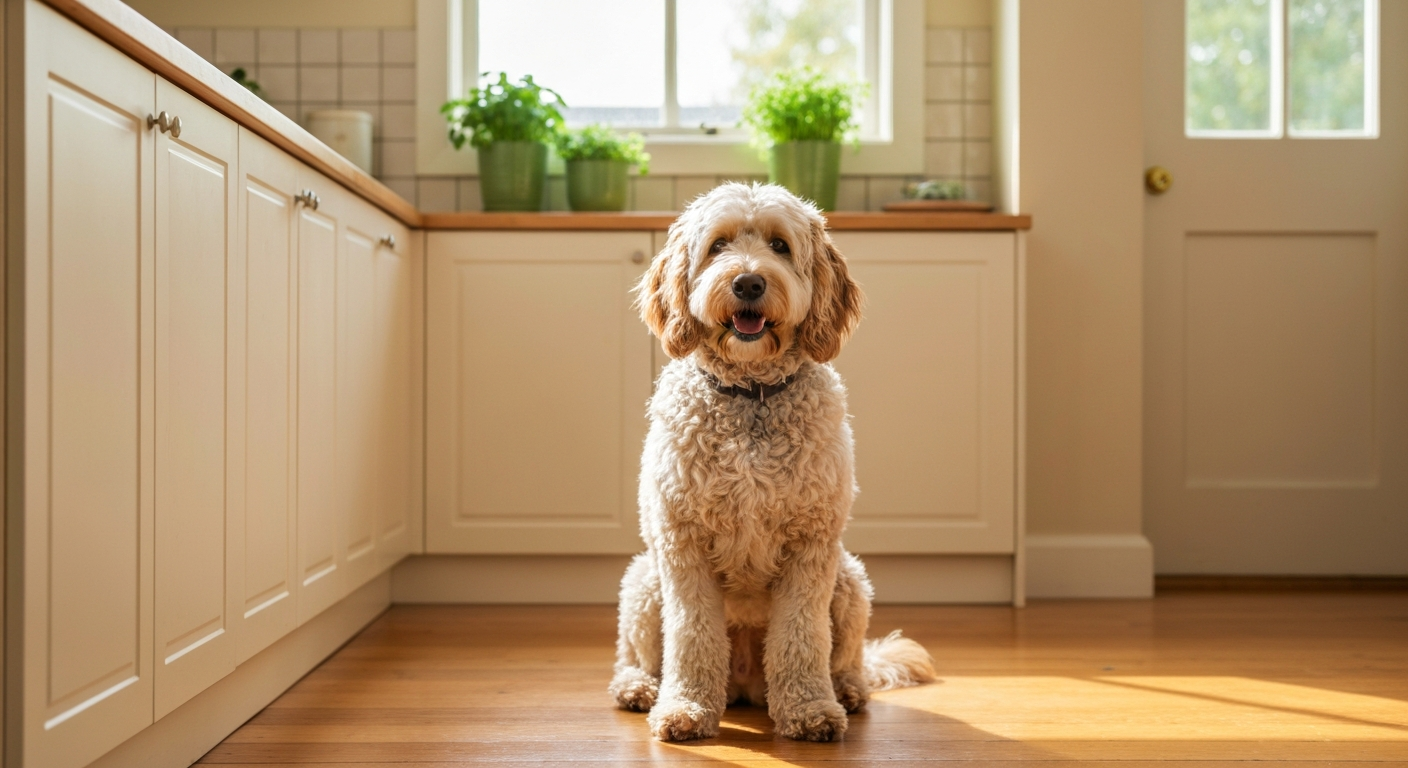
You shuffle into the kitchen at 6 a.m. and find it: a small puddle of bright yellow or yellow-green foam on the floor, and your doodle standing nearby looking vaguely apologetic. No blood, no obvious distress — your dog is already wagging and eyeing the treat cabinet. So what just happened, and should you be worried?
If you are searching why does my doodle vomit yellow bile, you are not alone. Yellow bile vomit — especially in the morning — is one of the most common digestive complaints in goldendoodles and labradoodles. It has a name, a clear mechanism, and in most cases, a straightforward fix. But because doodles have a genuinely distinct digestive profile compared to most breeds, the generic advice you will find elsewhere often misses the mark. This guide goes deeper.
By the end you will know exactly what that yellow stuff is, why your particular dog is prone to it, which signs mean "monitor at home" versus "call the vet now," and a concrete protocol you can start today.
What Is Yellow Bile, and Why Does It Show Up in Vomit?
Bile is a yellow-green digestive fluid produced continuously by the liver and stored in the gallbladder. After a meal, bile is released into the small intestine to help break down fats. The key word there is after a meal — bile is designed to work on food that is already in the gut.
When a dog's stomach is empty for too long, bile can reflux backward from the upper small intestine into the stomach. An empty stomach has no buffering food to absorb it, so the bile irritates the stomach lining directly. The dog's response is to vomit it up. What comes out is that characteristic bright yellow liquid or frothy yellow foam — sometimes with a tinge of green if it is more heavily bile-saturated.
This is the core mechanism behind bilious vomiting syndrome (BVS) in dogs. It is not a disease. It is a pattern: vomit yellow bile on an empty stomach, feel fine immediately afterward, repeat unless the underlying cause is addressed.
Why Are Doodles So Prone to Bile Vomiting?
This is where the generic dog-content answer breaks down. Doodles are not just any dogs. Both the poodle and the retriever lines that make up most doodle mixes carry tendencies that stack the deck toward digestive sensitivity.
Poodle-line digestion is notably reactive. Poodles have a higher incidence of food sensitivities, slower gastric motility in some individuals, and mucosal hypersensitivity — meaning the stomach and intestinal lining responds more strongly to irritants like pooled bile than a lab or beagle's gut might. Cross that with a golden retriever or labrador retriever, both of which have their own documented sensitivity rates, and you have a dog that is predisposed to feeling every ripple in its digestive system.
Three specific factors make doodles especially vulnerable:
- Sensitive stomach baseline. Many doodles live with subclinical gut inflammation that keeps the digestive system in a slightly irritated state. You can read more about the full picture in our doodle sensitive stomach guide.
- Food sensitivities and leaky gut. Chronic exposure to trigger ingredients creates low-grade gut inflammation that slows gastric emptying — food sits longer, bile timing gets disrupted, and the whole system becomes more prone to reflux. The food allergies hub covers this in depth.
- Curly coats and owners who miss early signs. This one is indirect but real: doodle owners often do not notice early GI symptoms — loose stools, mild gas, occasional grass-eating — because their dogs still seem happy and energetic. By the time bile vomiting becomes a regular event, it has often been building for a while.
The Most Common Triggers for Yellow Bile Vomiting in Doodles
1. Too Long Between Meals (The Overnight Fast)
This is the single most common cause, and it explains why dog throwing up yellow bile in the morning is such a frequent search. A dog that eats dinner at 5 p.m. and does not eat again until 7 or 8 a.m. has been fasting for 14–15 hours. For a sensitive doodle, that is plenty of time for bile to pool and irritate.
Sven, our oldest, went through a phase of doing exactly this — we would find the yellow puddle two or three mornings a week. Moving his dinner from 5 p.m. to 7 p.m. and adding a small raw meaty bone before bed stopped it almost immediately. Sometimes the fix really is that simple.
2. Delayed Gastric Emptying
Some doodles empty their stomachs more slowly than average. A meal that lingers too long can trigger bile reflux even when the gap between meals seems reasonable. High-fat meals are a common culprit here — fat slows gastric emptying more than protein or carbohydrate. If you recently increased dietary fat (switching proteins, adding more rich toppers), that can tip a borderline dog into regular bile vomiting.
3. Food Sensitivities and Chronic Gut Inflammation
As mentioned above, a doodle reacting to a trigger ingredient — commonly chicken, beef, dairy, wheat, or corn in conventional diets — lives with ongoing gut inflammation. That inflammation disrupts normal gastric motility and bile coordination. The bile vomiting in these cases often comes alongside other clues: recurring soft stools, itchy paws, or ear issues. Addressing the food sensitivity often reduces bile episodes even though the two symptoms seem unrelated.
4. SIBO and Gut Dysbiosis
Small intestinal bacterial overgrowth (SIBO) and broader gut dysbiosis are more common in doodles than many owners realize. An imbalanced gut microbiome affects gut motility, bile acid metabolism, and the integrity of the intestinal lining — all of which can contribute to bile reflux vomiting. Supporting gut health with appropriate probiotics and, if needed, dietary changes is a key part of a long-term management plan. The gut health supplements hub is a good starting point for understanding your options.
5. Acid Reflux and Gastroesophageal Issues
Chronic acid reflux can mimic BVS or coexist with it. The stomach produces acid even when empty, and in a dog with reflux tendencies, that acid — sometimes mixed with bile — works its way up. These dogs often show additional signs: lip-licking, swallowing repeatedly, eating grass, or seeming uncomfortable when lying down after meals.
Red Flags: When Yellow Bile Vomit Is an Emergency
Most morning bile vomit in an otherwise-happy doodle is benign. But some situations demand same-day or emergency veterinary attention.
How to Tell If It Is a Pattern Worth Treating
| Pattern | What It Suggests | Action |
|---|---|---|
| Yellow bile once or twice, long gap since last meal, dog acting normal | Classic BVS / overnight fast | Adjust meal timing, add bedtime snack |
| Yellow bile most mornings despite normal meal gaps | Delayed gastric emptying or acid reflux | Try dietary fat reduction, consider vet workup |
| Yellow bile plus loose stools, itchy skin, ear issues | Food sensitivity driving gut inflammation | Elimination diet, food allergy investigation |
| Yellow bile plus bloating, lethargy, pain | Potential GDV, pancreatitis, obstruction | Emergency vet immediately |
| Yellow bile during or after a diet change | Transition disruption | Slow the transition, support with probiotics |
The Management Protocol: What to Actually Do
Step 1: Fix Meal Timing First
This costs nothing and works for a large percentage of doodles with BVS. Push dinner as late as practically possible — 7 or 8 p.m. rather than 5. Add a small high-protein snack (a chicken neck, a tablespoon of plain cooked meat, or a small portion of their regular food) at bedtime. Feed breakfast as early as your schedule allows. The goal is to keep the overnight fasting window under 10–12 hours.
Step 2: Review Dietary Fat Content
If your doodle eats a high-fat diet or you recently added rich foods, pull back temporarily. Lower-fat meals empty from the stomach faster, giving bile less time to pool. This is especially relevant if you feed raw — some protein sources (lamb, pork belly, duck) are significantly higher in fat than others (turkey, rabbit, lean beef).
Step 3: Address Food Sensitivities If Present
If bile vomiting comes alongside other GI symptoms or skin/ear issues, it is worth investigating food sensitivities properly. An elimination diet using a novel protein is the most reliable starting point — our food allergies hub walks through the process. Switching from kibble to a cleaner diet often dramatically reduces overall gut inflammation and, with it, bile vomiting frequency. If you are considering raw feeding, the 7-day food transition plan covers how to make the switch without triggering more GI upset. And if you are already raw feeding but noticing more vomiting around travel, the travel feeding guide has practical advice for keeping sensitive stomachs stable away from home.
Step 4: Support Gut Health
A good species-appropriate probiotic is worth adding for any doodle with recurring bile vomiting. Look for strains shown to support canine gut motility and reduce inflammation — Lactobacillus acidophilus and Bifidobacterium animalis are well-studied in dogs. Slippery elm bark powder (a small amount mixed into food before meals) coats and soothes the stomach lining and can reduce the irritation that triggers vomiting. Bone broth — low-sodium, no onion or garlic — is another gentle gut-soother that three dogs in our house get regularly as a meal topper.
Step 5: Keep a Simple Log
Before your vet visit, write down the pattern for one to two weeks: time of vomit, time of last meal, what was eaten, any other symptoms. Vets can make a diagnosis much faster with a clear pattern in front of them. Note whether your doodle seems fine right after vomiting (classic BVS) or remains lethargic and uncomfortable (warrants faster investigation).
FAQ
Your Next Step
For most doodles, yellow bile vomiting resolves once meal timing is fixed and the diet is cleaned up. If your dog has a broader pattern of GI sensitivity — loose stools, frequent gas, grass-eating, inconsistent appetite — the bile vomiting is likely just one piece of a bigger picture. Our doodle sensitive stomach guide covers that full picture, from root causes to the dietary approaches that consistently work for this breed. Start there, implement the meal-timing fix this week, and give it two weeks to see a real difference.